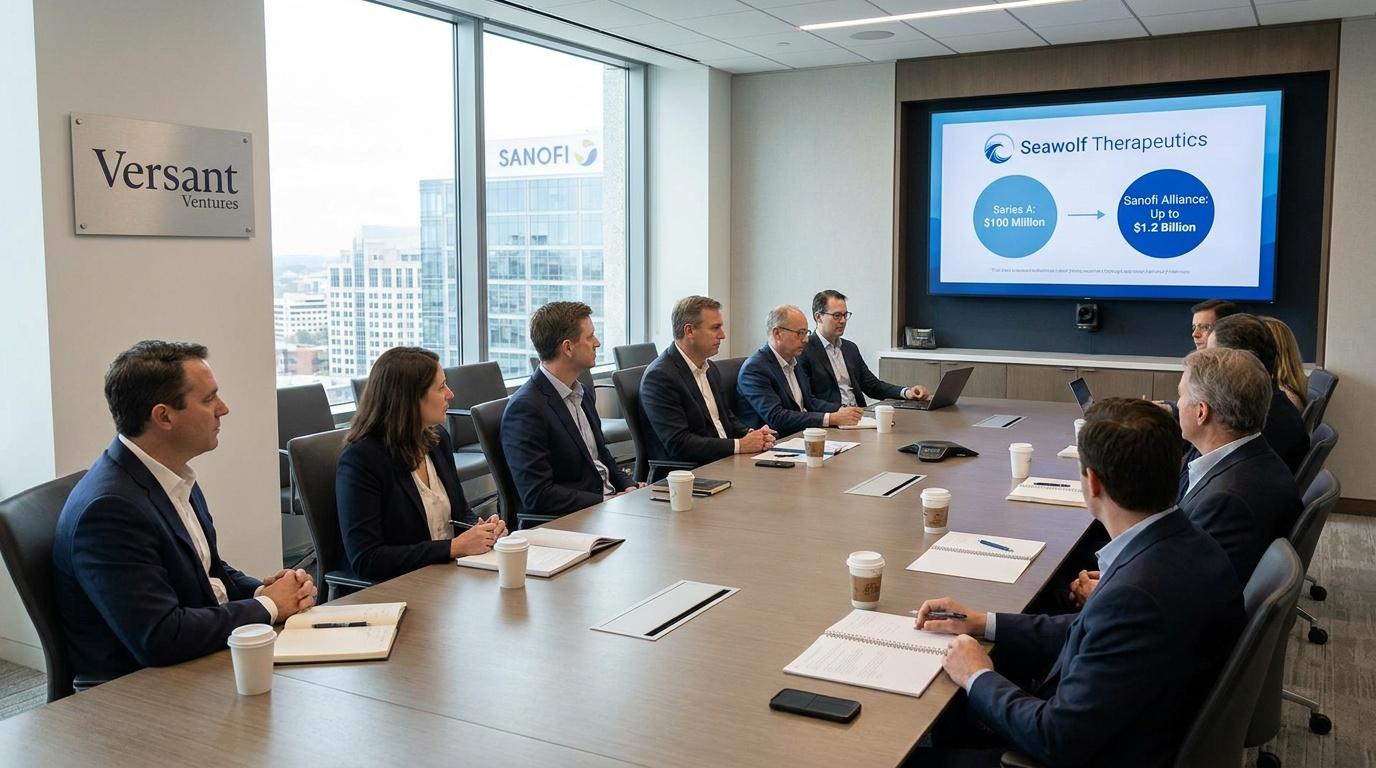
Seawolf Therapeutics launched Monday with two pieces of financing at once: a $100 million series A and an exclusive multi-target research and licensing alliance with Sanofi worth up to $1.2 billion in potential milestone payments. For a newly emerged platform company, that combination gives Seawolf both operating capital and an early partner willing to place a large option on its delivery approach.
The company is built around Trident, a redosable lipid nanoparticle-based DNA delivery platform. Seawolf said the system is designed to deliver DNA-based payloads that last longer than RNA-based LNP therapies while matching their potency, safety and scalability.
What Seawolf Is Selling
The pitch is less about a single named drug than about a delivery format meant to expand what non-viral nucleic acid medicines can do. Seawolf said animal testing has shown potent and durable activity with a clean safety profile, though it did not provide program-level data in the release.
The company’s lead program is aimed at metabolic diseases, but Seawolf did not disclose further details. That leaves the main near-term signal on the platform side: investors and partners are backing the idea that redosable DNA medicines could offer a different durability profile than RNA-based approaches without giving up the manufacturing and scalability advantages associated with LNP systems.
Where The Capital Is Coming From
The series A included founding investor Versant Ventures as well as Novartis Venture Fund, Eli Lilly, CRISPR Therapeutics and other backers. Sanofi, meanwhile, signed on for a multi-target collaboration covering bleeding disorders and other indications, with Seawolf eligible for up to $1.2 billion in biobucks plus tiered royalties on potential sales.
That structure matters because it shifts Seawolf from a pure venture-funded platform story into a hybrid financing model where strategic capital is validating the technology before human proof-of-concept is public. In an environment where platform claims often struggle to convert into partner dollars, Sanofi’s willingness to sign an exclusive deal suggests delivery remains an investable bottleneck in genetic medicine, not just a supporting technology.