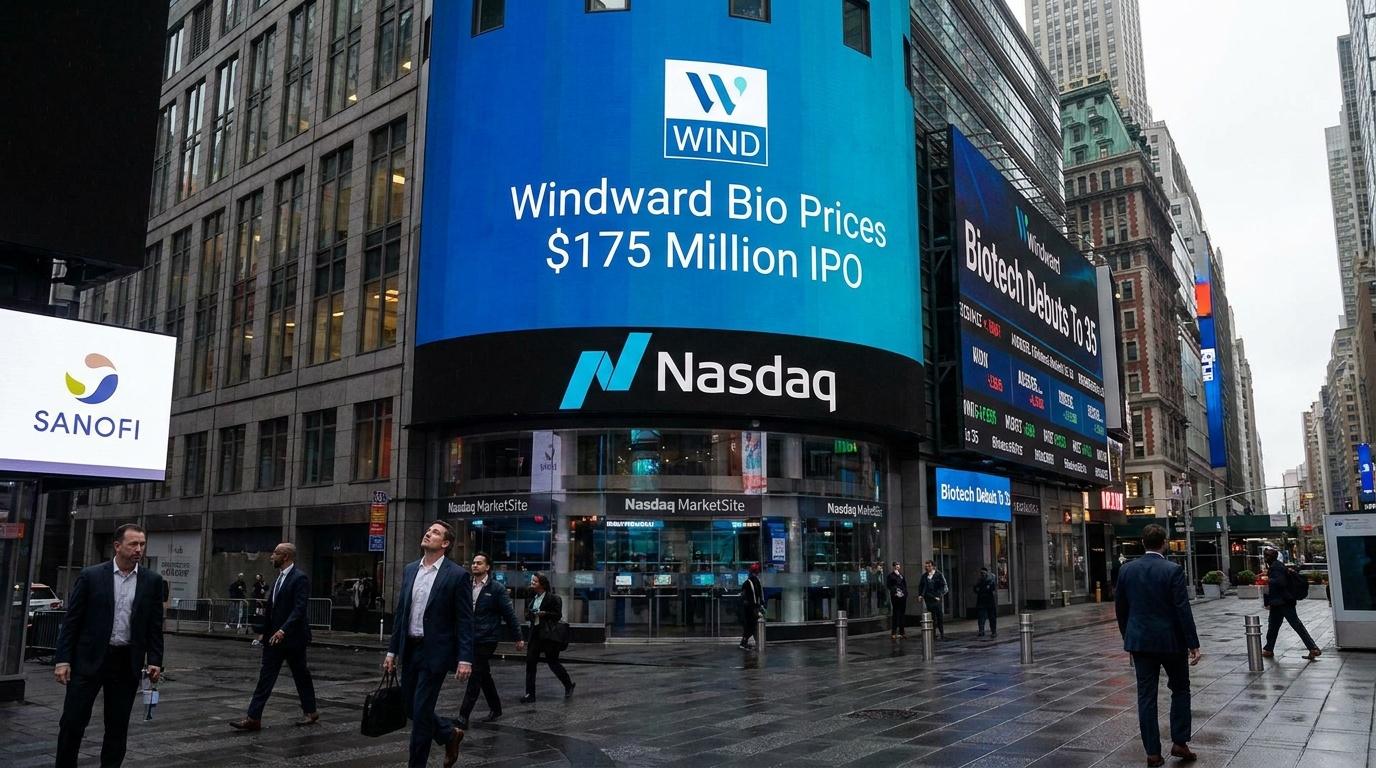
Windward Bio has joined the public markets with an IPO expected to generate $175 million in gross proceeds, adding another data point to what has become a much more active biotech financing year. According to the company’s Thursday night release, the Swiss startup sold nearly 10.3 million shares at $17 per share and debuted on the Nasdaq Friday.
The offering also includes a 30-day option for underwriters to buy up to 1.5 million more shares at the IPO price. Separately, Windward generated $50 million from a private placement by Sanofi Foreign Participations B.V., a subsidiary of Sanofi. Sanofi’s venture arm had also participated in Windward’s $165 million series B crossover round in May.
Use Of Proceeds
Windward said it will need up to $227.5 million to complete three trials for monoclonal anti-TSLP antibody WIN378, including potential regulatory and manufacturing activities. The asset is being studied in a Phase 2/3 trial for asthma and a Phase 2 trial in chronic obstructive pulmonary disease, with a confirmatory asthma trial expected to start in the first half of 2027.
The study is intended to evaluate WIN378’s potential as a twice-yearly treatment. For investors, that keeps the story centered on whether the company can turn a financing window into enough capital to carry a lead respiratory program through multiple value-setting studies rather than returning quickly for more funding.
The Broader Financing Signal
Windward’s deal brings the total number of biotech IPOs in 2026 to 35, according to BioSpace’s count. The article notes that this total includes Parabilis Medicines’ $670 million summer IPO, described as the largest public debut in biotech history.
The significance is less about one company than what the pace of issuance says about capital markets. BioSpace reported that proceeds and exits have both surpassed yearly IPO totals from 2022 through 2025, while only eight biotechs went public in all of 2025. Windward’s financing suggests investors are still willing to fund later-stage clinical stories with defined trial plans, especially when strategic pharma participation is already in place.