BioNTech has agreed to pay $205 million to buy an FDA priority review voucher from Scholar Rock, a move aimed at speeding a future filing from its late-stage oncology pipeline. The voucher was granted through the FDA’s September approval of Scholar Rock’s spinal muscular atrophy therapy Isembyld.
A priority review voucher allows a sponsor to shorten the FDA review timeline for an application from the standard 10 months to six months. BioNTech did not say which oncology asset it intends to use the voucher for, but the size of the payment signals that the company sees material value in pulling a U.S. decision forward by four months.
Why The Voucher Matters
The transaction stands out both for price and for timing. Priority review vouchers remain scarce even after Congress recently extended the FDA’s Rare Pediatric Disease PRV program through Sept. 30, 2029. By purchasing a newly awarded voucher now, BioNTech appears to be removing the risk of having to compete later in a tighter market.
The pricing in recent deals shows how much that optionality is now costing. Priority review vouchers were mostly sold at around $150 million to $160 million last year, according to the source, before Jazz Pharmaceuticals unveiled a $200 million sale in January 2026. Before this transaction, Ultragenyx recently sold two rare pediatric disease vouchers for $203 million and $210 million, and Edetis Therapeutics, which is being acquired by Ani Pharmaceuticals, had agreed to sell its voucher for $190 million. BioNTech’s $205 million purchase sits near the top of that recent range.
Which Asset BioNTech May Be Positioning
BioNTech declined to identify the intended program, but the source points to the PD-L1xVEGF bispecific pumitamig as the most logical candidate based on the company’s pipeline. BioNTech has described pumitamig as a backbone for its oncology portfolio, and Bristol Myers Squibb has already joined the program in a 50-50 co-development and co-commercialization collaboration. As the market authorization holder in the U.S., BioNTech would be responsible for FDA filings.
The company has already been trying to move pumitamig toward market as efficiently as possible. Those steps include revising the Rosetta Lung-02 study in first-line non-small cell lung cancer so that progression-free survival, rather than overall survival, is the single primary endpoint. According to the source, that design could at least allow BioNTech to start an early filing conversation with the FDA. Rosetta Lung-02 is advancing toward a potential readout in 2029, while the first global phase 3 data for pumitamig are expected from Rosetta Lung-01 in first-line extensive-stage small cell lung cancer in 2028.
Other advanced oncology assets look less likely to justify a $205 million acceleration tool. DualityBio-partnered trastuzumab pamirtecan, or T-Pam, has two pivotal readouts behind it, one from a phase 2 trial in previously treated endometrial cancer and one from a phase 3 trial in previously treated HR-positive, HER2-low breast cancer. But its path is less clear after BioNTech described the Dynasty-Breast02 result as a modest progression-free survival benefit accompanied by a higher rate of interstitial lung disease than previously observed, including severe and fatal events. During BioNTech’s third-quarter earnings call last week, outgoing chief medical officer Özlem Türeci said the company and DualityBio were assessing the totality of clinical data to determine next steps and discussing plans for a biologics license application submission.
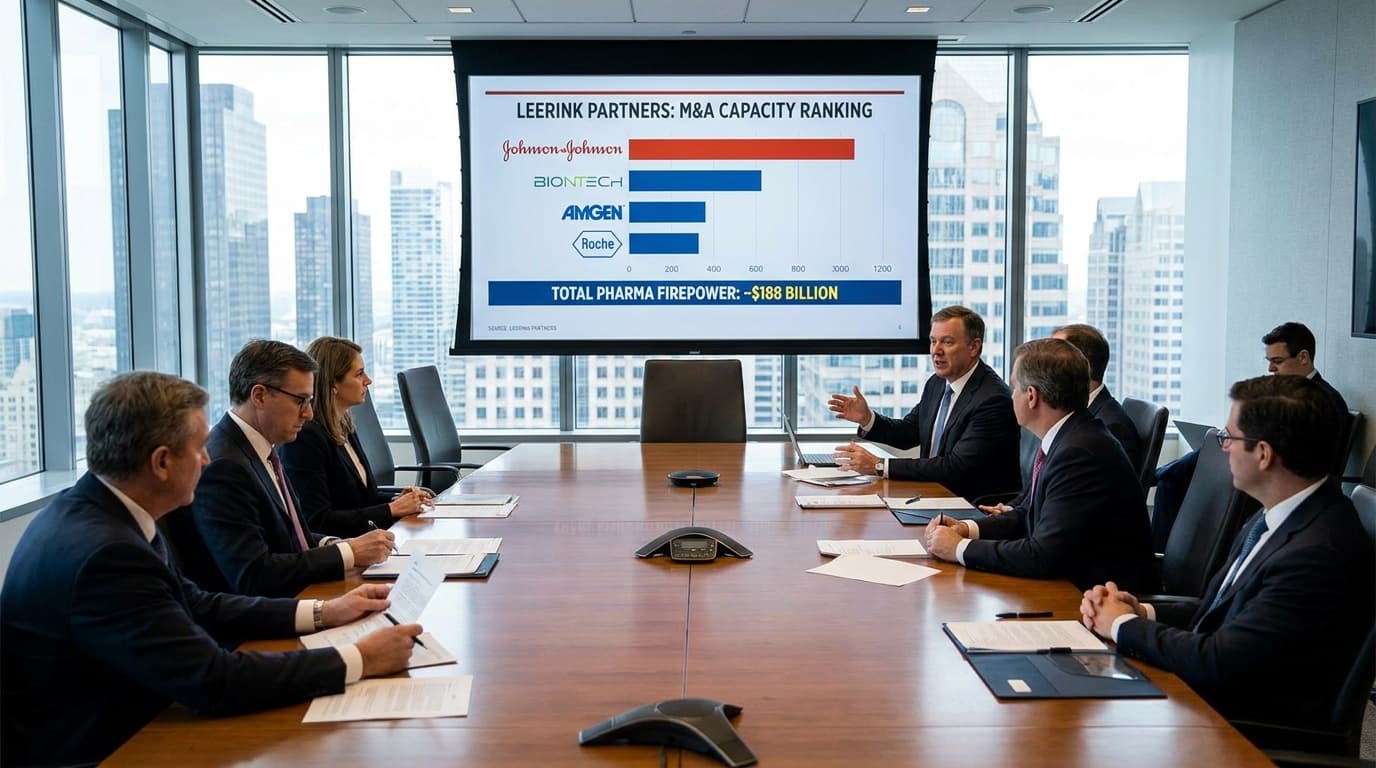
The company also expects the first overall survival interim analysis this year from a phase 3 trial of its OncoC4-partnered CTLA-4 antibody gotistobart in second-line squamous NSCLC, but Leerink Partners said in a Nov. 3 note that its expectations for that readout were low.
The signal in the voucher purchase is less about the mechanism than about portfolio confidence. Most buyers keep their identities confidential, but BioNTech disclosed this one while navigating a surprise, high-profile C-suite transition and approaching several major oncology milestones. Paying $205 million years ahead of a possible filing suggests the company sees at least one U.S. oncology application as commercially important enough that four months of review time is worth securing now.