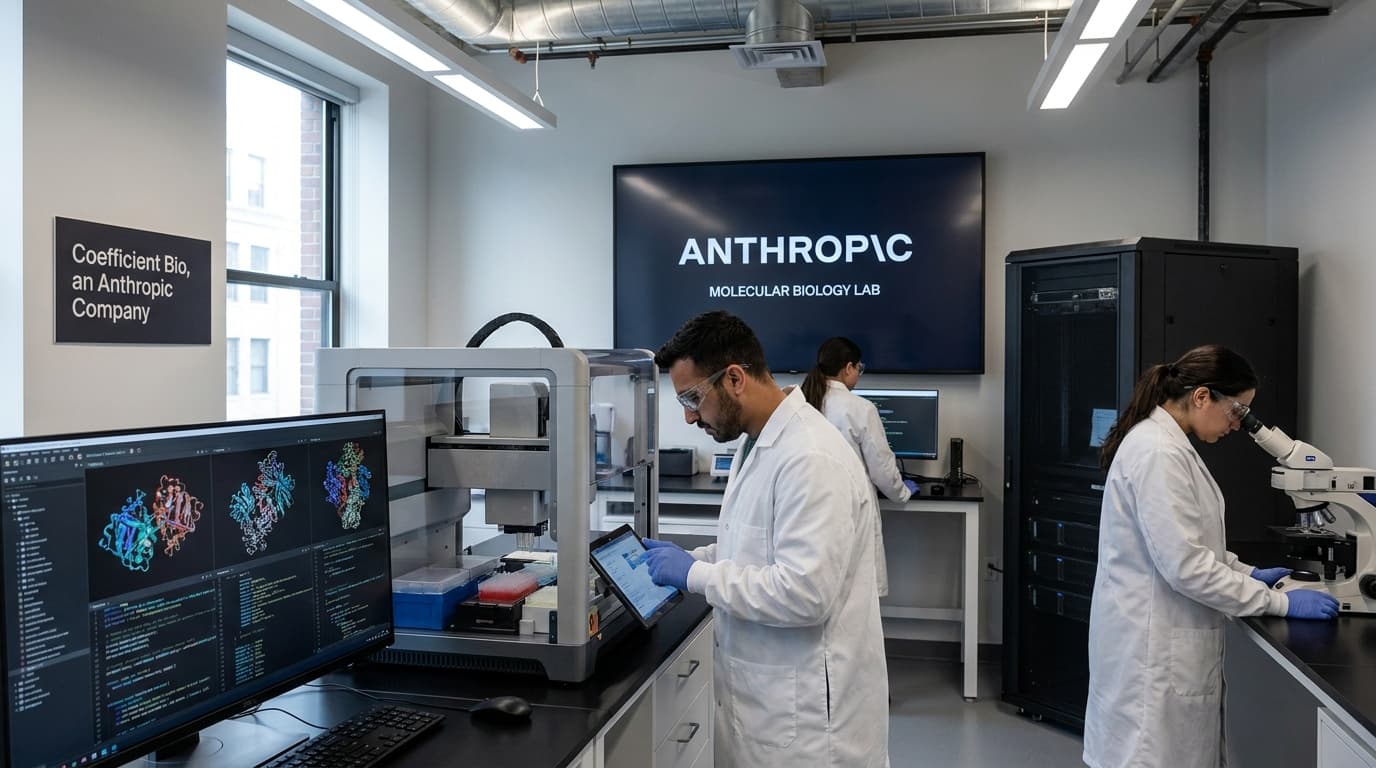
Anthropic used its IPO filing to lay out a broader push into drug discovery and development, describing plans that go beyond supplying AI models to pharmaceutical customers. The company said it is building its own life sciences research capabilities, including a molecular biology laboratory, and is deploying Claude in drug discovery and development through internal researchers.
That shift gives more substance to Anthropic’s life sciences strategy than partnership announcements alone. The maker of the Claude AI platform already works with companies including Novo Nordisk and Bristol Myers Squibb, and it added Novartis CEO Vas Narasimhan to its board in April. But the S-1 suggests Anthropic wants a more direct role in scientific discovery, not just a place in the software stack around it.
Anthropic is preparing to list on Nasdaq under the ticker “ANT.” The filing does not specify an offering price or number of shares, although an August report from The New York Times said the offering could raise more than $100 billion and push the valuation toward $2 trillion.
The operating model Anthropic described
The company’s life sciences offering includes Claude for Life Sciences, which Anthropic said is designed to support scientists and researchers across early discovery, preclinical research, clinical trial operations and regulatory submissions. According to the filing, the platform integrates with electronic laboratory notebooks, scientific databases and other research tools and provides specialized capabilities in organic chemistry, structural biology, laboratory protocols and bioinformatics.
Anthropic also described a path from digital assistance to physical lab execution. Its Model Hardware Standard, the filing said, enables AI agents to operate laboratory and manufacturing equipment including microscopes, liquid handlers and commercially available robotic arms.
The company expanded that internal biology capacity further through its April acquisition of Coefficient Bio, a computational biology startup. Anthropic said the transaction involved 15.4 million shares, with part of the consideration tied to continued employee service. The deal had previously been reported to be worth $400 million.
In the filing, Anthropic placed this work inside a broader thesis it calls “Powerful AI,” which it said could become widely available within a few years. The company envisions AI systems that could match or exceed the capabilities of top human experts across scientific disciplines, perform complex tasks autonomously and operate laboratory equipment and robotic systems. In that framing, life sciences is one of the areas where better models could improve development efficiency and decision quality, rather than a side market for general-purpose enterprise software.
The risks the company chose to spell out
The same filing is unusually direct about how different this business is from Anthropic’s historical base as a software and AI research company. The company said its life sciences research program requires activities outside that prior experience, including handling biological and chemical materials, operating laboratory equipment and complying with biosafety and environmental requirements.
Anthropic warned that these activities could create new liabilities such as workplace injuries and environmental contamination, while also potentially subjecting operations to preclinical and clinical research regulations. It added that any drug candidates or discoveries emerging from its research would face the “lengthy, costly, and uncertain development and regulatory pathways characteristic of the life sciences industry” and might never generate revenue.
The filing also highlights model risk in scientific and healthcare use. Anthropic said errors, inaccurate results and hallucinations could contribute to patient harm or compromised research. The company added that it may be unable to fully understand or explain why its models produce particular outputs or behave in particular ways, which could limit its ability to predict or prevent failures, provide explanations to customers or regulators, or satisfy emerging regulatory, transparency and explainability requirements.
As its healthcare and life sciences products expand, Anthropic said it could face oversight under laws governing drugs, biologics, medical devices and protected health information, including regulations administered by the FDA and comparable international agencies. Regulators could require additional authorizations, product changes or restrictions on some uses.
The strategic signal
Anthropic’s filing points to a more capital-intensive and regulated version of AI in drug discovery than the standard platform-vendor narrative. Building internal biology teams, buying computational biology capability and connecting models to real laboratory systems can create a stronger claim on downstream value if the technology proves useful, but it also means taking on the operating burdens of life sciences.
The company has already run into policy friction elsewhere. In March, the Department of Health and Human Services barred employees from using Claude as President Donald Trump sought to blacklist the company’s technology across the federal government, while competing products from OpenAI and Google remained available to federal employees. The dispute also touched drug review infrastructure because the FDA had initially relied on Claude for its Elsa platform before transitioning to Google’s Gemini as its primary AI model.
For biopharma, the practical message is less about imminent proprietary drug launches than about supplier evolution. Anthropic is signaling that some AI companies no longer see life sciences as just an enterprise-sales vertical; they see it as a domain where they may eventually want to participate in discovery itself, with the attendant regulatory exposure clearly acknowledged in advance.