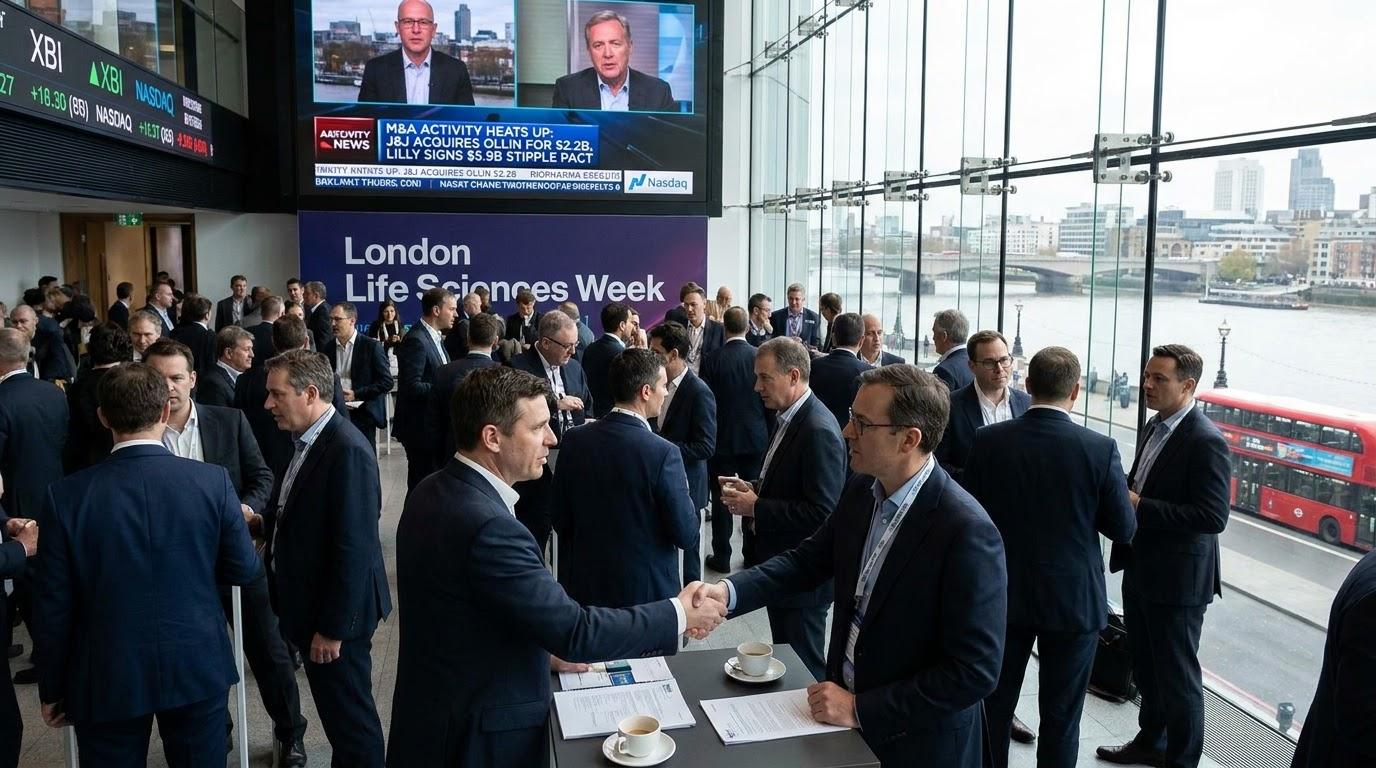
Biopharma executives and investors gathered for London Life Sciences Week with a more confident tone on financing and deal activity than the wider macro backdrop might suggest. The clearest proof point came in real time: Johnson & Johnson announced a $2.2 billion acquisition of Ollin Biosciences on the conference’s first day, while Eli Lilly agreed a $1.5 billion deal for Calytrix Bio and then followed with a $5.9 billion oncology pact with Stipple Bio.
For deal advisers, that pattern looked durable rather than incidental. Jane Hobson, a partner in Baker McKenzie’s London M&A group, said she sees “a very healthy sector” and expects M&A to continue, with not only large transactions but also mid-market and lower-end mid-market deals likely to come through. She described two main acquisition logics for pharma companies: buying revenue that can help the “bottom line straight away” and buying assets that fill the innovation pipeline. She also said private equity remains interested and is expanding into riskier investments.
The Capital Picture
Investors used the week to signal that Europe’s funding gap may be narrowing, at least for private companies. Sofinnova Partners said it had raised its largest fund yet at $815 million and plans to back about 15 clinical-stage companies, primarily in Europe. Antoine Papiernik, Sofinnova’s chairperson and managing partner, said next year could be “Europe’s time to shine,” but argued that Europe still needs a mindset shift because capital available in the region is not deployed into life sciences as readily as in the U.S.
Forbion made a similar case from a larger base. The firm said last month that it had raised 2.3 billion euros, or about $2.6 billion, across two life sciences-focused funds. General partner Wouter Joustra said Europe has not lacked ideas or science so much as capital, especially for larger later-stage rounds. In his view, that is starting to change as European firms raise bigger pools and can support companies for longer instead of forcing them to seek U.S. investors earlier.
That distinction matters strategically. The investment signal from London was not that capital has become abundant across every stage, but that Europe is trying to build enough scale in private financing to keep more value creation local before companies need to cross the Atlantic.
The Limits And The Risks
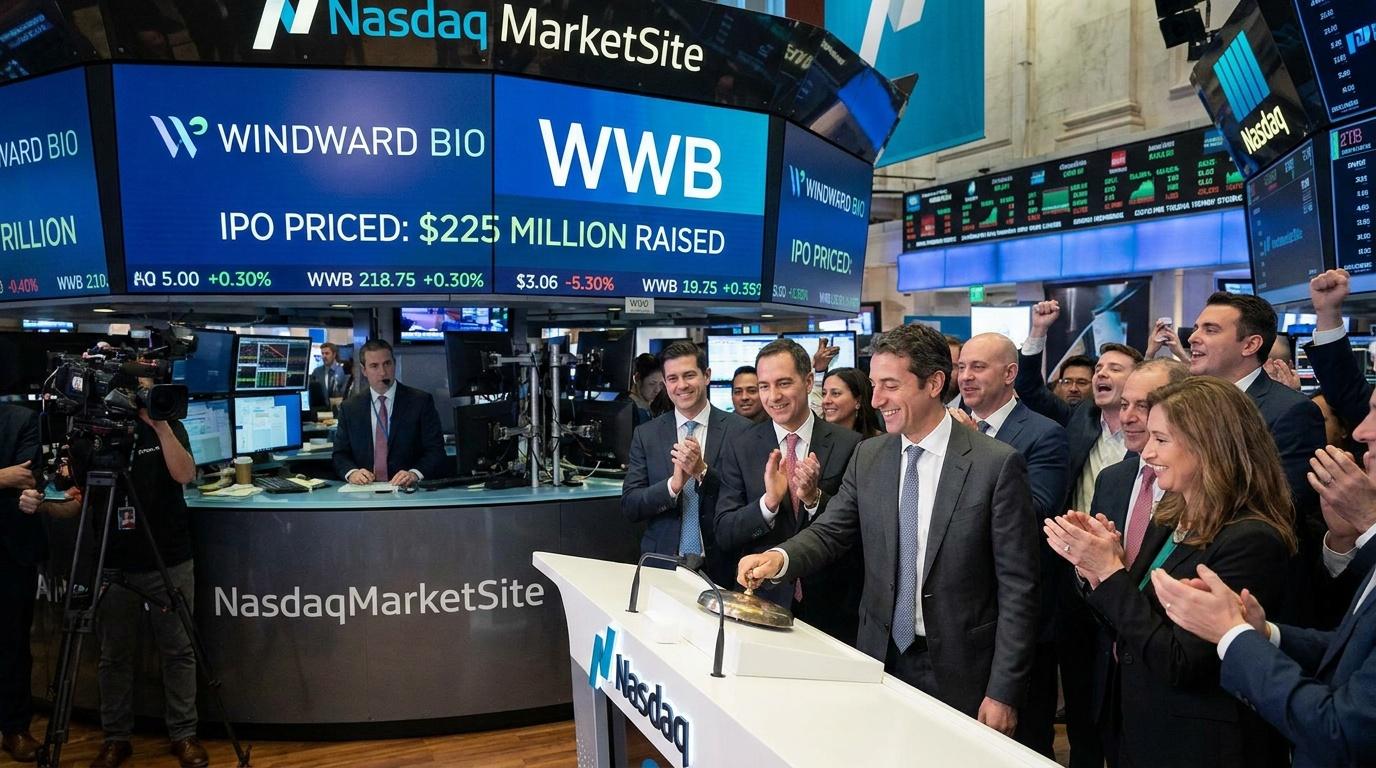
Even with bigger European funds, the public-market center of gravity remains in the U.S. Joustra said Europe still lacks a Nasdaq equivalent, and Papiernik went further, calling Nasdaq “the only game in town, period.” Optimism about a recovery in London listings has not yet translated into a broader reopening, though Reuters reported that Ellipses Pharma was considering a London listing.
From the U.S. investor side, Richard Lau of Foresite Capital said 2026 had been a good year both for his firm and for biotech more broadly. He pointed to the SPDR S&P Biotech ETF, XBI, which fell to nearly $70 in spring 2025 before climbing to around $140 this year. He said the fund has more recently plateaued because of rising interest rates and “a lot of stuff happening out in China.”
China was a recurring topic in London not only as a source of competition but as a source of execution advantage. Lau said China’s biotech ecosystem has expanded sharply over the past five years and cited clinical trial infrastructure, automated biobanks and automated oncology drug compounding as examples of capacity that can affect global competitiveness. The unresolved policy issue is whether the U.S. Treasury’s proposals to add “pharmaceutical compounds” to the Comprehensive Outbound Investment National Security Program will change how investors and companies engage with that ecosystem.
Taken together, the conference mood suggested a market that is selective rather than fully reopened: strategic acquirers are active, private capital in Europe is getting bigger, but exits still run through U.S. markets and China policy has become an investment variable in its own right.