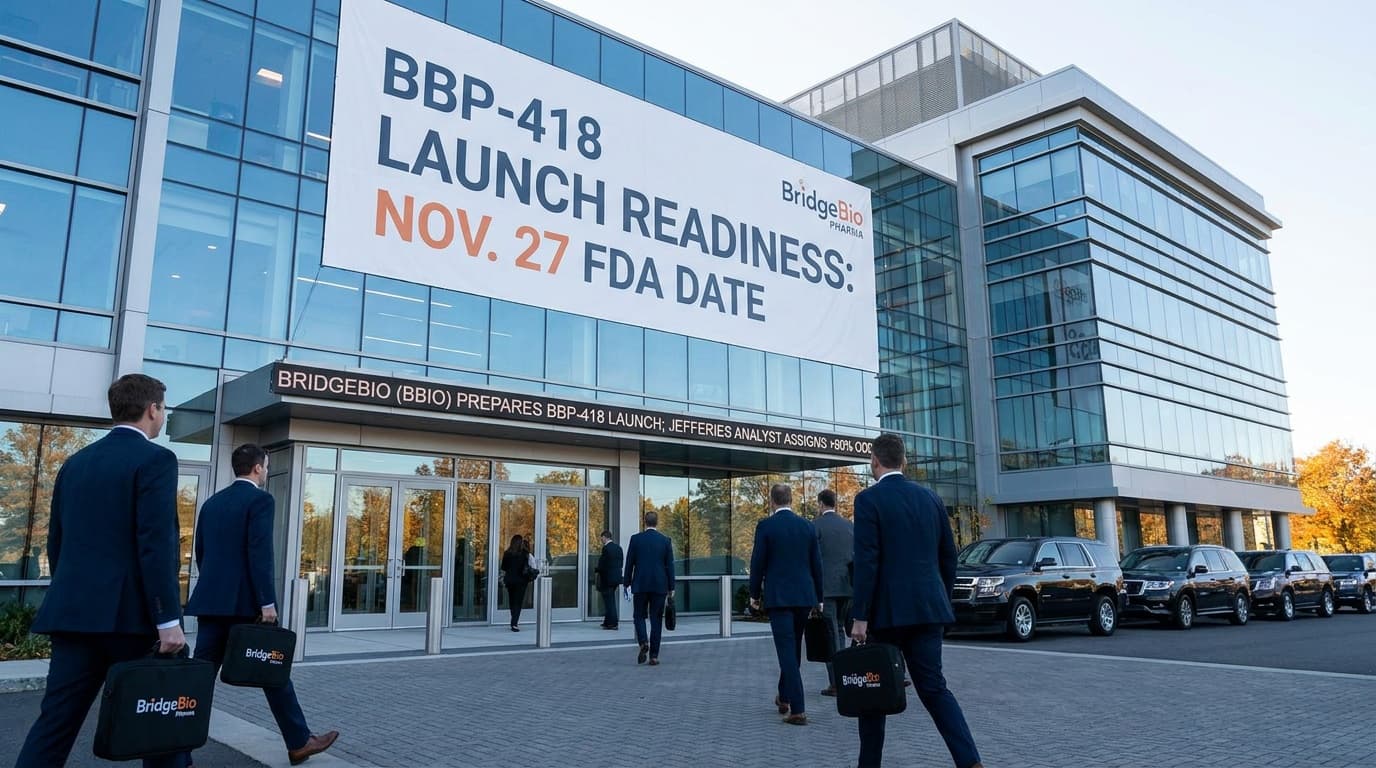
BridgeBio Pharma is entering the final stretch before an FDA decision on BBP-418 for limb-girdle muscular dystrophy Type 2I/R9, with a Nov. 27 action date, priority review and no scheduled advisory committee meeting. If approved, the oral therapy would become the first disease-modifying treatment for the rare condition.
The immediate industry signal is not only regulatory. BridgeBio is already organizing for launch before the decision, betting that a focused prescriber base and a genetically defined patient population can support a second rare-disease commercial business after the 2024 approval of Attruby in transthyretin amyloid cardiomyopathy.
The data
LGMD2I/R9 is caused by a mutation in the FKRP gene, which reduces levels of the encoded protein, disrupts glycosylation and damages muscle. According to Christine Siu, CEO of BridgeBio’s neuromuscular division, patients with the chronic progressive disease lose function over time and may become wheelchair bound between their 20s and 40s, while also facing cardiac and respiratory disease that can be fatal.
BBP-418 is designed as an oral glycosylation substrate therapy intended to increase FKRP and thereby raise levels of glycosylated alpha-dystroglycan, or αDG, which the source describes as a common biomarker for the disease. In the Phase 3 FORTIFY study, which enrolled 112 patients ages 12 to 60 with LGMD2I/R9, the drug met its primary interim analysis endpoint. BridgeBio reported a statistically significant increase in glycosylated αDG versus approximately no change in the placebo group from baseline to three months.
The company also said BBP-418 met secondary endpoints, including an increase in glycosylated αDG and a reduction in serum CK, a biomarker for muscle damage. Exploratory findings from a 12-month interim analysis last month suggested potential cardiac benefit, with 100% of treated patients returning to the normal range for HS troponin I, which indicates heart muscle injury.
BridgeBio is also emphasizing function. Siu said the therapy produced a 31-second difference versus placebo on a 100-meter time test after 12 months, a measure she described as reflecting the functional status of muscles involved in the respiratory system. Her interpretation was practical rather than abstract: she said that magnitude can mark the difference between independent community ambulation and being limited to the house.
Jefferies analyst Andrew Tsai argued those results make the package persuasive because they show patients diverging from the natural history of decline. He put the probability of approval above 90% by the FDA deadline and said the absence of an advisory committee likely suggests the agency does not see a major unresolved issue in the dataset.
The commercial picture
BridgeBio’s launch plan relies on concentration rather than breadth. Siu said the company has sales representatives, medical science liaisons and field reimbursement managers already trained and in the field, targeting about 150 Muscular Dystrophy Association centers where genetically confirmed patients are treated.
The company has identified more than 500 prospective patients in the U.S. and believes that number could extend to potentially thousands more with broader genetic testing and diagnosis. Siu said the wider opportunity includes more than 7,000 patients worldwide, with approximately 3,000 in the U.S. and between 4,000 and 5,000 in Europe, particularly in Scandinavia, where she said the causative FKRP mutation has genetic roots.
That rarity cuts both ways. It narrows the launch footprint, but it also supports premium pricing if payers accept the functional evidence. Tsai modeled about $400,000 as an annual list price, while adding that people ultimately would not be surprised by a price of $1 million plus. BridgeBio has not disclosed pricing. Siu said the company is in active discussions with payers and that market research indicates they have been receptive to the unmet need and the functional data the company has shared.
Tsai said the market opportunity could exceed $1 billion annually at peak sales. For BridgeBio, that would mean BBP-418 is not just another orphan launch but a test of whether the company can repeatedly build commercial franchises around narrowly defined genetic diseases. He also said a potential approval could bring BridgeBio to profitability by the fourth quarter of 2027.
The road here
BridgeBio is not approaching this as a first launch. Its only commercial asset, Attruby, found widespread success after its 2024 approval, and the company is now trying to apply a similar operating model to BBP-418.
The strategic significance is that BBP-418 would pair first-in-disease positioning with a limited number of specialist centers and an identified patient base, reducing some of the market-access uncertainty that often comes with broader neuromuscular launches. The remaining swing factors are pricing, the pace of diagnosis expansion and whether the FDA reads the biomarker and functional package as strongly as the company and Jefferies do.