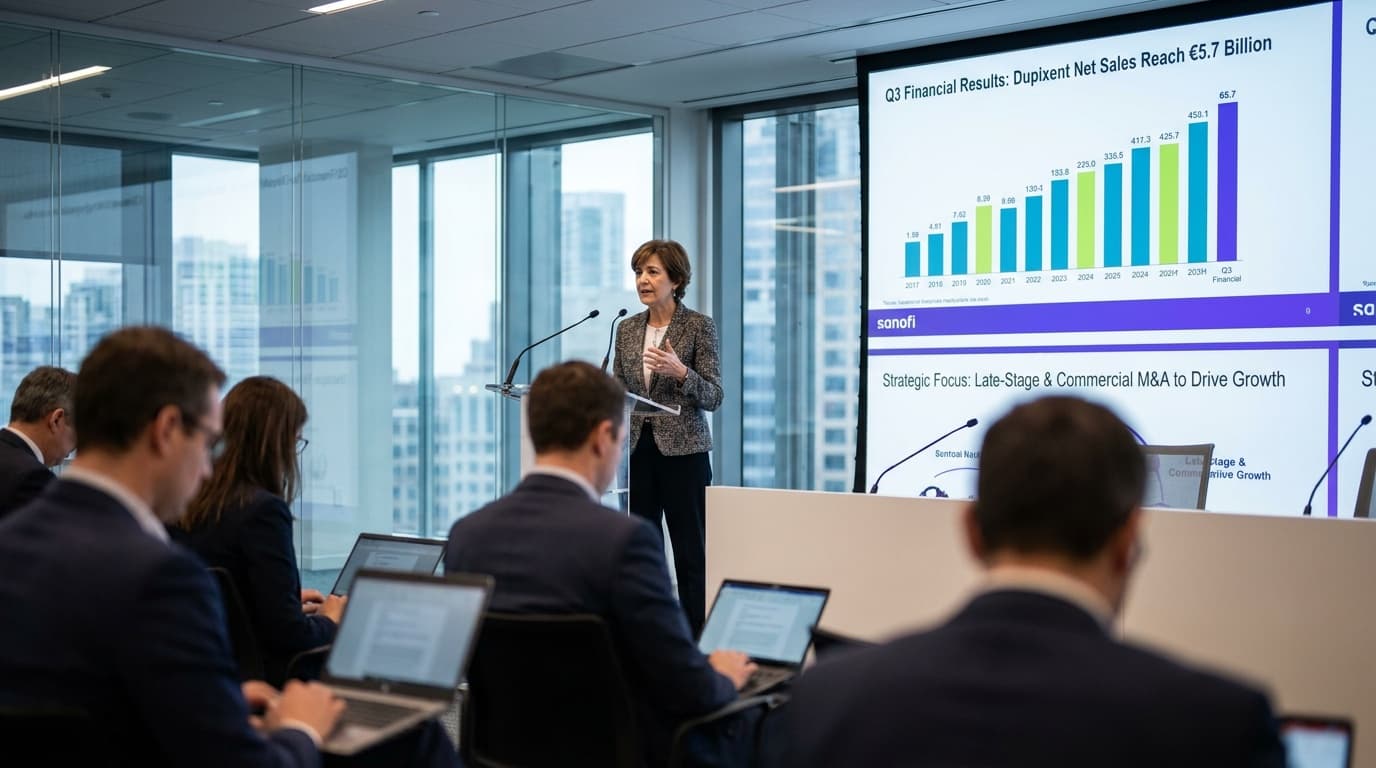
Sanofi said it is pursuing business development and M&A focused on later-stage and commercial medicines after a third quarter that again highlighted how much the company depends on Dupixent. CEO Belén Garijo told the company's earnings call that Sanofi plans to use its “robust cash flow generation” to fund transactions, particularly around later-stage or commercial opportunities.
The strategic logic is tied directly to patent risk. Garijo said Sanofi is “laser-focused on ensuring growth beyond Dupixent [loss of exclusivity]” and added that moving to later-stage commercial assets would let the company derisk scientifically and clinically while using its commercial capabilities more effectively. CFO François Roger said a strong balance sheet and low leverage give Sanofi access to external financing for its next growth drivers.
The Commercial Picture
Sanofi posted net sales of €14.4 billion ($16.1 billion) in the quarter, ahead of the €13.3 billion ($14.0 billion) consensus estimate that Guggenheim Securities analysts shared in a note to investors. Net sales increased 14.3% at a constant exchange rate.
The company also raised its full-year outlook. Sanofi now expects sales to grow by a low-teens percentage at constant currencies, compared with about 10% growth forecast in July and a high single-digit growth target when first-quarter results were reported in April.
Dupixent remained the center of the story. Sales of the drug rose 34.8% to almost €5.7 billion ($5.3 billion), driven by what Sanofi described as strong demand across a range of indications. Guggenheim analysts had expected Dupixent sales of just under €5 billion ($5.6 billion). The product represented 39% of Sanofi's net sales in the quarter, a concentration that has drawn analyst attention ahead of its 2031 patent expiry.
Newer products are growing, but from a much smaller base. A group of 13 launch products generated €1.4 billion ($1.6 billion) in the quarter, up 31.4% from the same period last year, led by the hemophilia A drug Altuviiio.
Why The Deal Focus Is Changing
Sanofi's vaccine business outperformed expectations even as reported sales declined. Vaccine revenue fell 6.6% to €3.2 billion ($3.6 billion), still above Guggenheim's €2.8 billion ($3.1 billion) forecast. Sanofi cited the timing of flu vaccine deliveries and lower sales of Beyfortus as reasons for the decline. In the U.S., Beyfortus sales dropped 39.3% to €240 million ($269 million), in part because of a smaller order from the CDC.
That mix helps explain why Sanofi is emphasizing dealmaking now. Internal R&D remains important, but Garijo said the pipeline and research “will take a bit of time to materialize and bear fruits.” Roger did not directly answer how much Sanofi could spend on a deal, though he reiterated that the company wants to retain a strong credit rating. In April, Roger said Sanofi could spend up to €15 billion ($16.8 billion) on R&D deals while retaining that rating, and that buying a commercial asset could add up to €10 billion ($11 billion) to the company's spending power.
Sanofi said it will keep pursuing bolt-on acquisitions for earlier-stage pipeline expansion as well, and Garijo added that the company plans to source innovation globally, including from China.