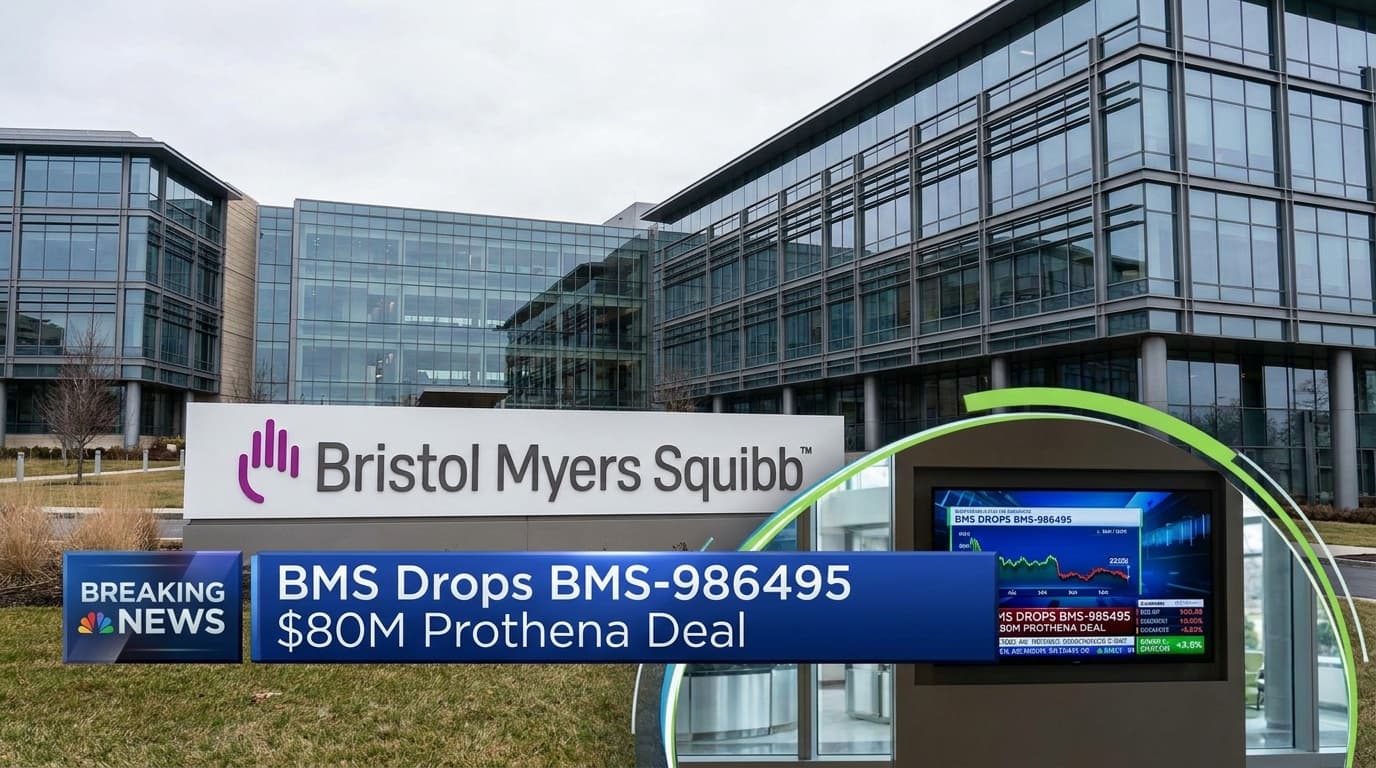
Bristol Myers Squibb has scrapped BMS-986495, a phase 1 neurodegeneration program it licensed from Prothena for $80 million in May 2024. A BMS spokesperson said only that, "Following review of Phase 1 data, we have decided not to advance this program."
The company did not disclose the phase 1 findings or specify what in the data drove the decision. Prothena had completed the phase 1 study in healthy adults earlier this year, and as recently as August had said it expected BMS to decide whether to advance the drug by the end of 2026.
The road here
BMS-986495 was previously known as PRX019. The FDA had cleared Prothena's investigational new drug application for the antibody in December 2023 before BMS took exclusive global rights in the 2024 licensing deal.
If BMS had moved the program forward, Prothena could have received an additional $55 million milestone payment. That means the termination cuts off at least one defined near-term value trigger from the partnership, even though neither company had publicly shared detailed clinical data from the completed phase 1 work.
What the decision signals
For BMS, the halt is another example of stricter early-pipeline filtering around partnered assets. The company also recently dropped ORM-6151, a CD33-targeting degrader-antibody conjugate acquired from Orum Therapeutics for $100 million in 2023.
At the same time, BMS said its broader neuroscience collaboration with Prothena is continuing. That includes moponetug, an Alzheimer's disease candidate in phase 2 development. In July 2023, BMS paid $55 million to expand its licensing rights to that drug beyond the U.S. The contrast matters strategically: BMS is still backing the collaboration, but with capital and development attention concentrated on the asset that has progressed further clinically rather than on an early neurodegeneration program whose phase 1 readout did not clear the company's bar.