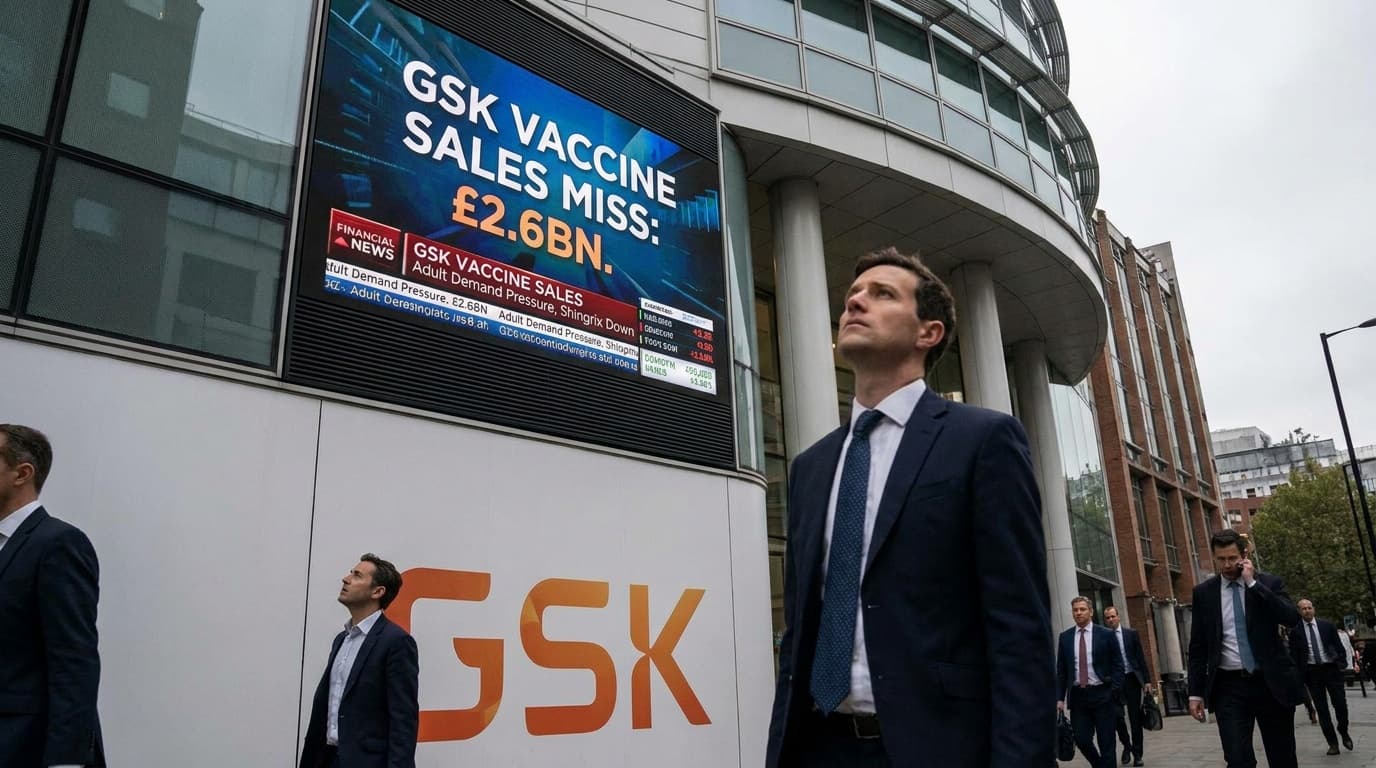
GSK’s third-quarter results showed a split picture that matters more than the top-line headline. Overall sales reached £8.9 billion ($11.83 billion), which Guggenheim Securities analysts said was in line with consensus estimates, but vaccine revenue fell to £2.6 billion ($3.46 billion) and missed expectations.
That shortfall centered on adult immunization demand. GSK’s respiratory syncytial virus vaccine Arexvy posted sales of £195 million ($259 million), below the consensus expectation of £231 million ($307 million), while the company said lower market demand was part of the reason sales fell more than 20%. Shingrix also missed expectations, declining 5% on a constant-currency basis amid what the company described as broader market pressure.
The commercial picture
CEO Luke Miels said on the earnings call that “the adult vaccines market overall is still challenging.” He added that the adult market was down about 18% versus this time last year, while Shingrix was down about 14%, suggesting GSK’s flagship shingles product is holding up somewhat better than the category even as it still contracts.
General medicine offered only limited relief. The unit generated £2.4 billion ($3.19 billion), beating expectations but remaining flat on revenue. Specialty medicines were the growth engine, rising 15% to £3.9 billion ($5.18 billion) at a constant exchange rate.
For investors, that mix sharpens the transition risk in GSK’s strategy. Guggenheim analysts said the quarter highlighted the challenge of producing sustainable growth with large vaccines and general medicines businesses that are relatively flat, especially as dolutegravir approaches patent expiry toward the end of the decade.
What is carrying the transition
The near-term counterweight is a set of newer and recently approved products, but the early signs remain mixed. Guggenheim said launches of Blenrep in multiple myeloma and Exdensur in asthma “continue to ramp slowly.” Blenrep recorded £50 million ($66 million) in sales, meeting analyst expectations, while Exdensur generated £27 million ($36 million), below the £36 million ($48 million) consensus.
Miels said GSK had “made good progress on Blenrep,” with repeat prescribers growing as physicians and patients get comfortable using the medicine. He also said Exdensur is building momentum, with prescribers, patients and access all increasing in the quarter.
That leaves more pressure on upcoming products. Guggenheim said Hibsago in chronic hepatitis B and Jideytro in ROS1-positive non-small cell lung cancer are becoming “increasingly critical.” Miels said those products will “meaningfully contribute to near-term growth,” and Nina Mojas, president of global product strategy at GSK, said on the earnings call that Hibsago, which the FDA approved last week, will be on the market within 10 days.