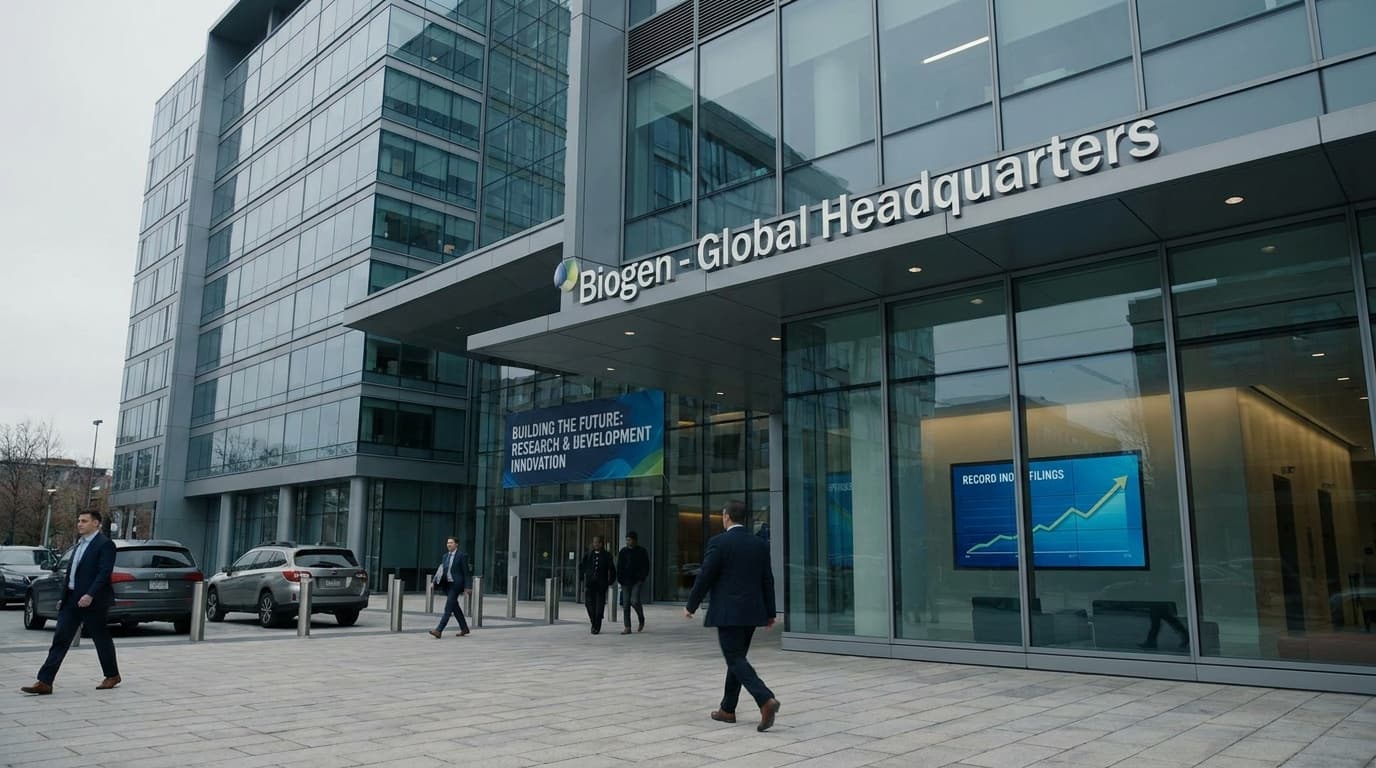
Biogen is using its third-quarter update to make a broader point about how it wants to rebuild its pipeline. CEO Chris Viehbacher told analysts the company has already produced five INDs this year, which he said is the first time in Biogen’s 48-year history that it has reached that level in a single year.
The milestone follows a period when, by Viehbacher’s account, Biogen went three years without bringing any new drugs into the clinic. He said the turnaround came after what he described as a “radical overhaul” of research and early development led by head of research Jane Grogan and head of development Priya Singhal.
The portfolio shift
Viehbacher said Biogen now expects six new programs with three new molecular entities. More important than the count is the operating model behind it. He told analysts the company historically evaluated opportunities on an asset-by-asset basis, but is now thinking in terms of portfolios of opportunities.
That change is a strategic signal for a company that has spent the past three years trying to move beyond its traditional concentration in multiple sclerosis and spinal muscular dystrophy. Biogen’s current phase 1 pipeline is weighted toward autoimmune disease, including an IRAK4 degrader, a BTK degrader partnered with C4 Therapeutics and a long-lasting anti-CD40 monoclonal antibody.
The commercial logic is straightforward: more early shots on goal can spread development risk at a time when large biotech companies are trying to avoid dependence on a narrow set of mature franchises.
How M&A fits
Viehbacher said Biogen has been “fairly intentional about M&A over the last three years.” The company has used acquisitions to extend into immunology, nephrology and ophthalmology, including Apellis Pharmaceuticals, RayThera, HI-BIO, Alcyone Therapeutics and Reata Pharmaceuticals.
He described Biogen’s acquisition “sweet spot” as assets between early preclinical development and phase 1b. In his framing, that is the most capital-efficient point to add external programs.
That statement helps explain why Biogen is emphasizing research productivity now. A company that wants to buy early and develop broadly still needs enough internal engine capacity to evaluate, absorb and advance multiple programs at once. Viehbacher’s target of 20 programs in early-stage development over the next few years suggests Biogen is trying to build that capacity rather than rely on a single late-stage catalyst to define its next chapter.