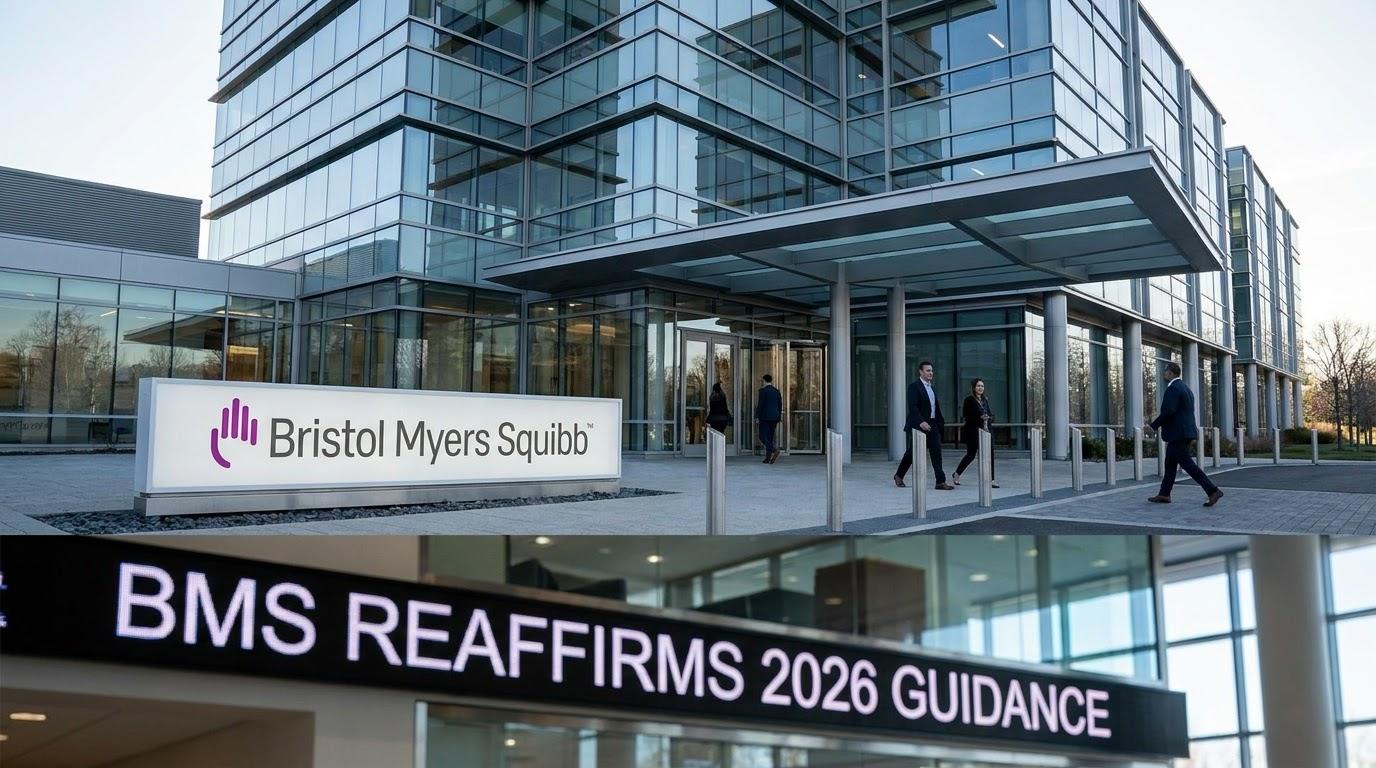
Bristol Myers Squibb said CFO and executive vice president David Elkins will leave the company on March 1, 2027, and then take the same role at the Coca-Cola Company in April. Kevin Dillon, currently senior vice president and head of corporate finance and business operations at BMS, will succeed him.
The change extends a broader reshaping of the company’s leadership team. It comes less than two weeks after BMS reorganized its R&D efforts as Chief Research Officer Robert Plenge announced plans to leave by the end of the year.
Why The Timing Matters
BMS paired the CFO announcement with a reaffirmation of all components of its full-year 2026 guidance that it had shared on the third quarter earnings call on Oct. 29. At that time, the company raised its full-year revenue forecast by 1%, from a range of $49-$50 billion to $49.75-$50.25 billion.
That guidance reaffirmation helps frame the finance handoff as a succession event rather than a reset in operating expectations. But the departure still arrives during a period when BMS is trying to show it can tighten execution ahead of major patent pressure.
Pipeline Pressure Is Driving The Reorganization
The earlier R&D overhaul consolidated all research and development activities under one leader. Once Plenge leaves, BMS Chief Medical Officer and development head Cristian Massacesi will lead the newly reorganized unit.
At the time, a BMS spokesperson said combining research and development would more closely connect scientific and clinical expertise, sharpen portfolio decision-making and execution, and focus resources on opportunities with the greatest potential. CEO Christopher Boerner described the combined R&D organization as an important step in positioning BMS for long-term growth, adding that it should help the company attract and retain talent, build critical capabilities and better integrate new technology.
The strategic backdrop is straightforward: BMS needs new products to offset future losses of exclusivity for Opdivo and Eliquis. In 2025, Pfizer-partnered blood thinner Eliquis generated $14.4 billion in global sales, while PD-1 checkpoint inhibitor Opdivo brought in $10 billion. Together, those two products accounted for about half of BMS’ $48.2 billion in revenue.
That concentration is why leadership changes in both finance and R&D carry more weight than a standard executive shuffle. The company is being judged on whether it can allocate capital and development resources toward credible replacements before those blockbusters come under heavier pressure.
What Investors Are Watching
BioSpace reported that BMO Capital Markets was underwhelmed last month by BMS’ plans to prepare for the patent losses. The firm pointed to risk around the company’s key potential revenue replacements: Cobenfy, milvexian and admilparant.
Against that backdrop, Dillon’s promotion matters because the next phase for BMS is not only about scientific productivity but also about capital discipline and portfolio choices. Reaffirmed guidance may steady the near-term message, but the larger test remains whether the new management structure can turn a reorganized R&D engine into products with enough commercial weight to absorb the coming revenue gap.