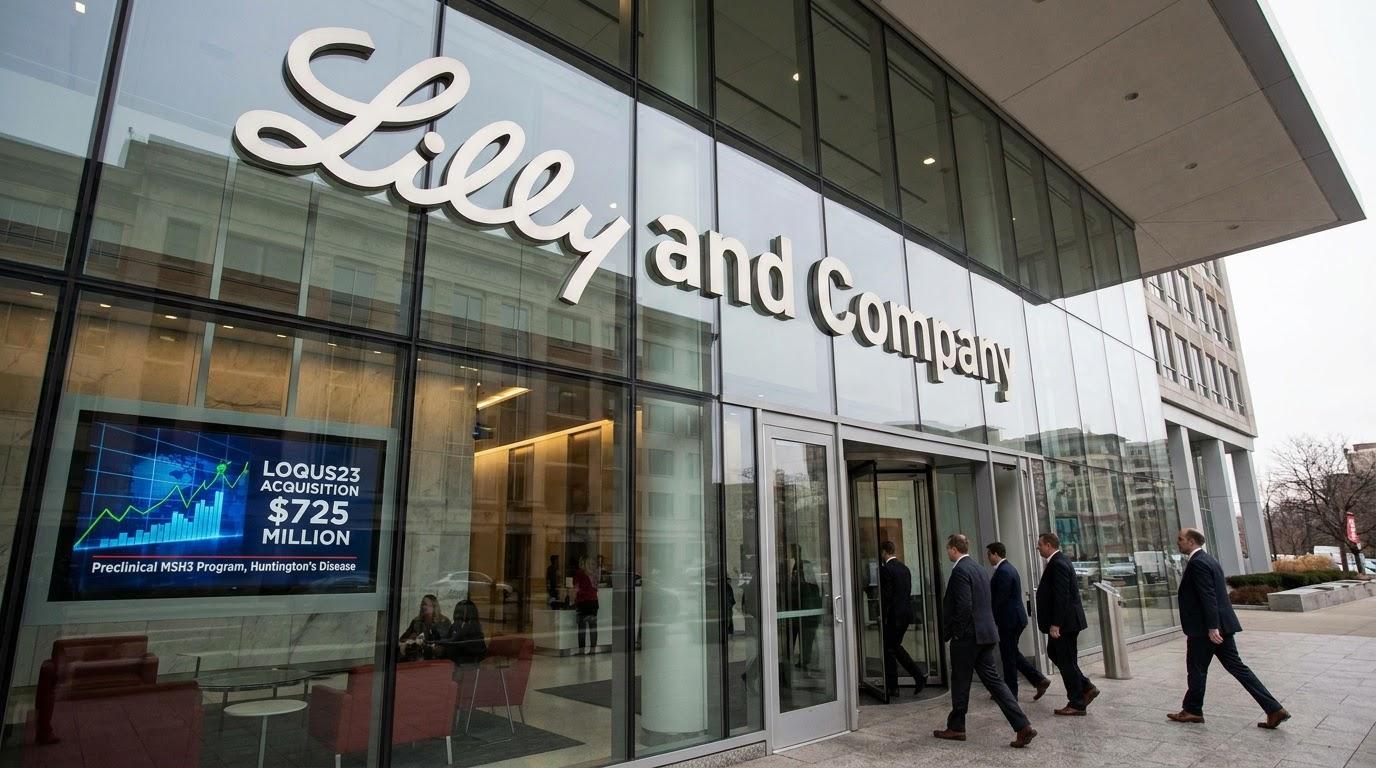
Eli Lilly has struck a deal to acquire LoQus23 Therapeutics for up to $725 million, buying a preclinical Huntington’s disease company built around small molecules targeting somatic expansion biology. The companies did not disclose the upfront payment, and the total value depends on development and regulatory milestones.
The asset at the center of the deal is LQT-23, a Huntington’s candidate that LoQus23 nominated in January. The small molecule inhibits MSH3, a DNA mismatch repair protein that the biotech selected based on genetic, postmortem and mechanistic studies.
Why Lilly Is Buying Early
This is a notably early bet. LoQus23’s team expects to file to run a clinical trial by the end of this year, and the supporting evidence cited in the report comes from Huntington’s cellular systems and animal models showing that the molecule blocks somatic expansion.
That timing matters strategically. Lilly is not buying de-risked clinical data here; it is buying position in an emerging target class before human proof arrives. The transaction is also Lilly’s second M&A deal of the month, following news one week earlier of its $1.5 billion Calytrix Bio takeover, which points to continued appetite for externally sourced pipeline building.
The Competitive Context Around MSH3
LoQus23 is entering a more active part of Huntington’s research rather than a vacant niche. PTC Therapeutics aims to move a splicing development candidate targeting MSH3 into human testing next year. Latus Bio has posted preclinical data on a gene therapy candidate designed to reduce MSH3 expression, and Arexera Therapeutics is advancing preclinical MSH3 programs alongside its lead huntingtin gene-focused candidate.
The target has also drawn published or reported work from scientists at Ionis Pharmaceuticals and Pfizer, a University College London team collaborating with Takeda, Voyager Therapeutics, and Passage Bio before Passage agreed to a reverse merger with Remix Therapeutics.
For Lilly, that wider activity is the signal. The company is paying to secure one specific approach to MSH3 with enough conviction to buy the whole biotech, suggesting major companies see room for multiple modality bets on the same Huntington’s mechanism even before the field has delivered clinical validation.