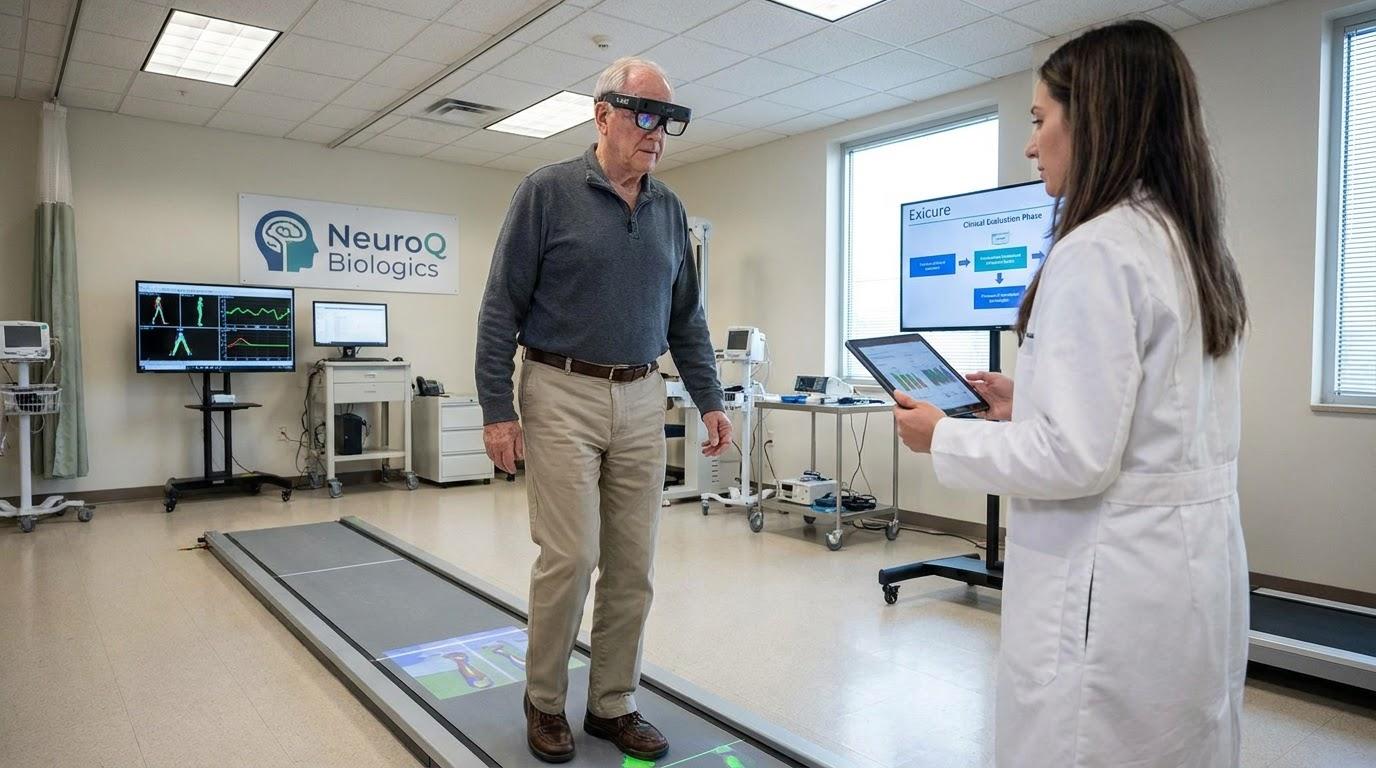
Exicure is expanding beyond its current business into Parkinson’s-focused medical devices through a partnership with NeuroQ Biologics and South Korean medtech company Laonz built around X-CUE, augmented-reality smart glasses designed for patients who experience freezing of gait.
The agreement is notable less for immediate revenue than for structure and readiness. Exicure said the glasses have been in development for more than a decade, that the latest version has completed product development, and that planned trials are intended to support commercialization. That makes this a late-development device entry rather than a concept-stage bet.
The transaction
Under the agreement, Exicure plans to acquire an equity interest ranging from 20% to 100% in NeuroQ, primarily by issuing Exicure common shares in exchange for NeuroQ shares held by Laonz. Exicure said the final acquisition percentage, share exchange ratio and other terms will be determined through later written agreements.
Following completion of the proposed share acquisition, Exicure plans to provide up to $500,000 in development funding. The company said that funding would support X-CUE’s clinical evaluation, regulatory advancement, manufacturing preparation and commercialization initiatives.
Laonz has already transferred the X-CUE business to NeuroQ, including related intellectual property, technology, assets and business rights. NeuroQ will lead continued development, clinical evaluation, regulatory approval and commercialization, with strategic support from Exicure.
The device and market signal
X-CUE generates augmented-reality visual cues intended to help Parkinson’s patients manage freezing-of-gait episodes and support mobility. It joins a growing set of wearable augmented and mixed reality devices aimed at helping patients overcome freezing challenges and maintain stable footing.
That positioning matters commercially because freezing of gait is a specific functional problem, and device adoption will likely hinge on whether planned studies show enough real-world benefit to justify regulatory and commercialization spending. More than a decade of development may reduce technical uncertainty, but it does not remove execution risk in clinical evaluation or market uptake.
For Exicure, the structure also preserves optionality. A proposed ownership range of 20% to 100% allows the company to scale its commitment as the program advances, rather than taking full exposure upfront. The next value inflection is therefore likely to come from evidence that the glasses can move through the remaining clinical and regulatory steps toward potential commercialization.