Immunovant has ended development of IMVT-1402 in cutaneous lupus erythematosus after the anti-FcRn antibody failed a phase 2 study, cutting off one development path for the program. The company compared IMVT-1402 with placebo in 57 adults with CLE and said that, at Week 12, scores on a CLE area and severity scale were statistically no better on the drug than on placebo, causing the trial to miss its primary endpoints.
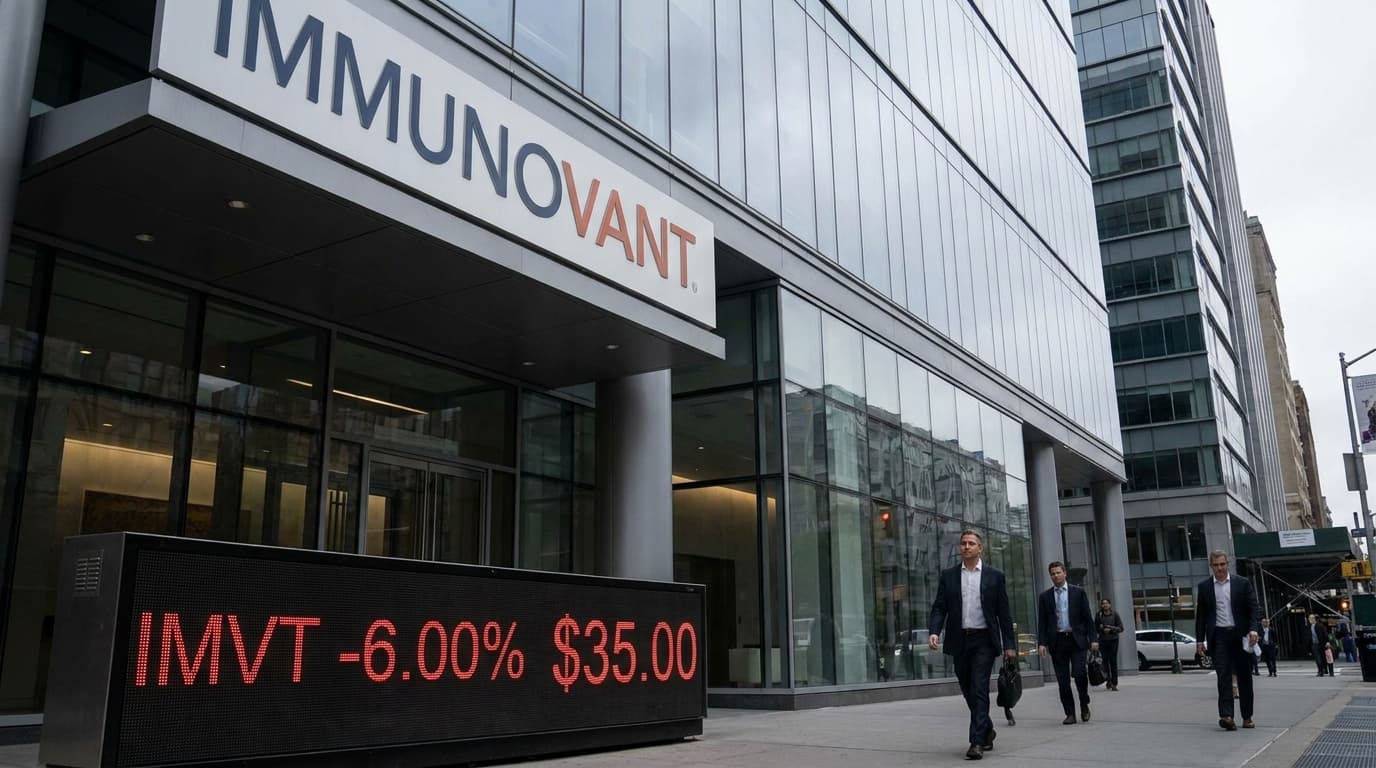
The company still highlighted numerical trends favoring IMVT-1402 on multiple endpoints and said patients with deeper IgG reductions from baseline were more likely to respond. Even so, Immunovant said the “competitive landscape and the clinical results observed” led it to discontinue work in CLE. Shares fell 6% to $35 in premarket trading Wednesday from a Tuesday closing price of $37.29.
The readthrough from the trial
The result closes off one indication but does not appear to have altered the broader development plan for IMVT-1402. Fierce Biotech reported that the antibody showed a favorable safety and tolerability profile in the CLE study, and Immunovant is continuing work in Graves’ disease, rheumatoid arthritis, myasthenia gravis, chronic inflammatory demyelinating polyneuropathy and Sjogren’s disease.
Guggenheim Securities analysts had already sounded cautious after Immunovant executives described the CLE trial last month as a “fact-finding proof-of-concept” study in a “competitive landscape.” That framing implied the company itself was treating the readout as exploratory rather than a clear registration-enabling step.
The competitive picture
The outcome also points to a more specific issue than a simple class failure. Johnson & Johnson reported a phase 2 win for Imaavy in systemic lupus erythematosus in January and moved into a pivotal program, showing FcRn blockers can have traction in lupus broadly. But CLE has largely been pursued by programs using other mechanisms of action.
Biogen reported a midphase win for its anti-BDCA2 antibody litifilimab in CLE in March. AstraZeneca and Germany's Merck KGaA are running phase 3 CLE trials of a type I interferon receptor inhibitor and a small-molecule inhibitor of Toll-like receptors 7 and 8, respectively, while Beeline is preparing to advance its TLR7/8 inhibitor into phase 3.
The strategic signal is that Immunovant appears to have judged a modest or mechanistically mixed signal insufficient in an indication where competitors are already more established. In that sense, the CLE exit looks like a portfolio-prioritization move as much as a trial failure: the company preserved capital and focus for indications where IMVT-1402 may have a clearer development path.