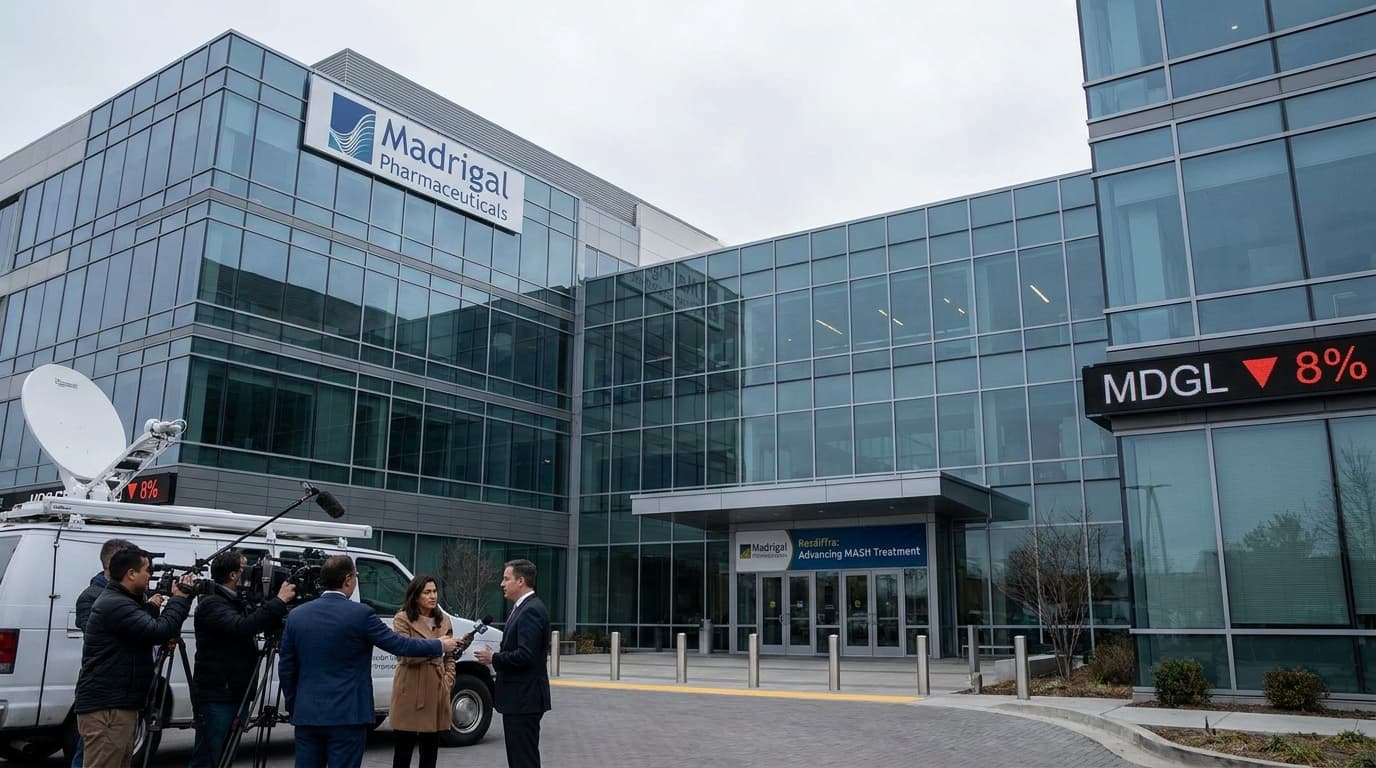
Madrigal Pharmaceuticals is confronting a whistleblower lawsuit tied to Rezdiffra, the first approved treatment for MASH, at the same time the product has crossed $1 billion in year-to-date sales since its FDA approval in March 2024. The suit was filed in the U.S. District Court for the Northern District of Illinois and was disclosed in Madrigal’s third-quarter securities filing.
The plaintiff, Michael Charlton, M.D., Madrigal’s former senior vice president and head of clinical development, alleges that senior leadership censored serious liver-injury data, compromised clinical-trial integrity and manipulated data presented at a medical conference. Madrigal said in a statement that it intends to defend itself vigorously and that it stands firmly behind the safety and effectiveness of Rezdiffra.
The Allegations
Charlton joined Madrigal from a professorship at the University of Chicago in October 2024. According to the complaint, he identified safety signals that included alleged failures to recognize cases of hepatic decompensation in clinical studies and findings of high relative rates of liver toxicity from the FDA Adverse Event Reporting System compared to other drugs.
Citi analysts, after querying FAERS based on the complaint, said they found “no outsized liver impact with Rezdiffra compared to marketed therapies for other liver-related conditions.” The firm said it examined two primary biliary cholangitis drugs that have not drawn liver-toxicity concerns post-approval and, after benchmarking reported liver safety events against estimated patient counts while excluding events such as hepatic cirrhosis related to MASH progression, found reported liver event rates were similar across the board.
A separate set of allegations centers on the role of Madrigal co-founder and board director Rebecca Taub, M.D., in evaluating clinical data from the phase 3 Maestro-NASH trial that supported Rezdiffra’s accelerated approval. Charlton alleges Taub, after being unblinded to treatment assignment, could prescreen Rezdiffra-associated liver adverse events and edit investigator-authored narratives before the reports were sent to independent expert panels. The complaint also cites one case in which Taub allegedly requested removal of a patient who had developed a life-threatening complication of liver disease from an ongoing phase 3 trial after effective unblinding.
The Data Integrity Dispute
The complaint also challenges data presented from the open-label compensated MASH cirrhosis, stage F4c, arm of the phase 3 Maestro-NAFLD-1 trial at the European Association for the Study of the Liver Congress last year. Charlton alleges a quality-control review found “pervasive problems” and that almost no data point or result in the presentation could be replicated from the underlying source data, including primary findings on improvements in liver stiffness.
According to the complaint, Charlton raised those discrepancies with CEO Bill Sibold, who allegedly told him to “stop looking.” Five weeks after flagging the EASL concerns to Sibold in June 2025, Charlton was told he would move to a new senior vice president role that, according to the complaint, had “no significant leadership,” and he lost his seat on Madrigal’s clinical trial protocol review committee.
For investors, the signal is less about an immediate change in Rezdiffra’s commercial trajectory than about whether litigation can reopen scrutiny on the evidentiary package behind an already approved and fast-growing MASH drug. Citi attributed an 8% Tuesday share decline to the lawsuit, and Madrigal’s stock was down about 8% again as of publication time Wednesday morning.