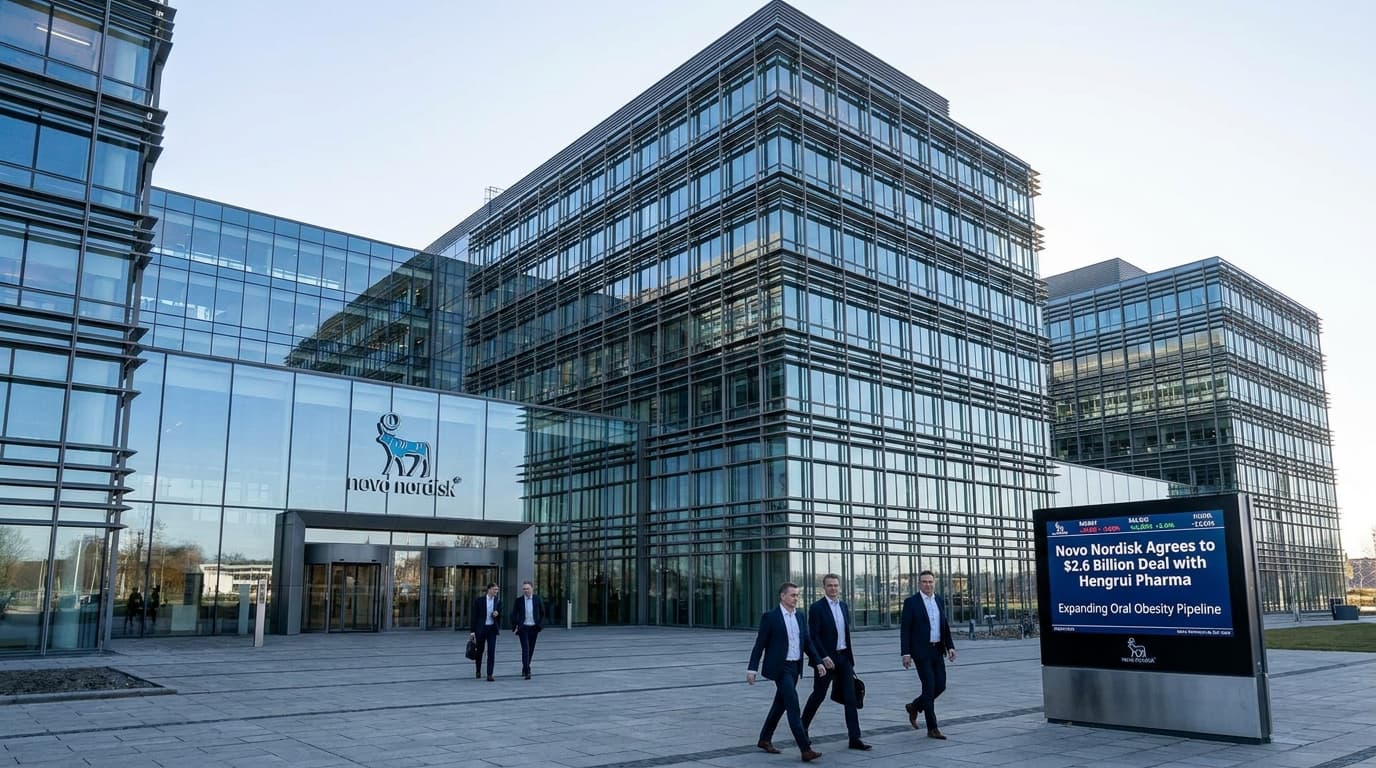
Novo has agreed to pay $300 million upfront to Hengrui Pharma for ex-China rights to HRS-1596, a preclinical GLP-1/GIP dual receptor agonist that both sources describe as positioned for once-weekly oral dosing. Potential milestone payments could bring the total value to $2.6 billion, and BioSpace said the package also includes royalties.
The asset is still early. Novo said Hengrui has already secured clearance in China to take HRS-1596 into Phase 1, including in weight management and type 2 diabetes, and the companies are targeting obesity, type 2 diabetes and other metabolic diseases. That keeps the deal firmly in the pipeline-building category rather than the near-term revenue category, even as Novo continues to look for new ways to differentiate in incretins.
The Commercial Picture
The strategic attraction is convenience. Eli Lilly’s Zepbound is already a GLP-1/GIP drug, but the FierceBiotech source noted it is only available as an injection. FierceBiotech also pointed to Viking Therapeutics’ GLP-1/GIP tablet in Phase 2 development, while adding that it requires daily dosing. If HRS-1596 can eventually deliver once-weekly oral administration, Novo’s argument is that the product could reduce dosing frequency versus current offerings.
That convenience angle is also how BMO Capital Markets framed the transaction. The firm wrote that HRS-1596 remains early and is unlikely to alter near-term competitive dynamics, but that once-weekly oral dosing could provide longer-term differentiation. BMO also said Novo appears to be leaning further into oral peptides following the early success of its Wegovy pill launch and that the Hengrui asset adds another target to a broad oral portfolio.
The sources do not present this as the kind of deal investors had been waiting for from Novo. BioSpace reported that BMO called it “not the transformative deal some may have been looking for,” even while welcoming the company’s continued investment in oral therapies across obesity, diabetes and other cardiometabolic diseases. That distinction matters: Novo is buying optionality around format and adherence rather than solving its immediate competitive problem.
The Road Here
The deal arrives during a period when Novo management has been trying to convince investors it has a longer-term plan after disappointing readouts, cancelled collaborations and ongoing challenges in the U.S., according to FierceBiotech. The same source said leadership has recently emphasized extended dosing options for GLP-1 drugs as a stated goal.
That push has shown up in multiple transactions. Last week, FierceBiotech reported, Novo struck a 1.17 billion euro ($1.3 billion) deal with Nanexa to combine a long-acting injectable drug delivery platform with Novo’s obesity and type 2 diabetes drugs. BioSpace added that on the same day as Novo’s Capital Markets presentation, the company also bought three early-stage obesity molecules from Kallyope without disclosing financial terms.
Hengrui’s position in partnering also helps explain why Novo moved now. FierceBiotech described the Chinese drugmaker as one of the most in-demand sources of biopharma innovation in China, citing large deals with Bristol Myers Squibb and GSK as well as Hengrui’s role in the obesity portfolio that helped Kailera Therapeutics secure a record-breaking IPO back in April. BioSpace likewise said Bristol Myers Squibb, Merck and GSK all have major partnerships with Hengrui.
For Novo, the signal is less about an immediate product catalyst than about portfolio architecture. The company is adding another oral metabolic asset with a dosing profile that could matter if efficacy and tolerability hold up later. For Hengrui, the agreement reinforces a pattern in which Chinese-origin assets are being used by multinational drugmakers to fill strategic gaps before clinical proof is fully established.