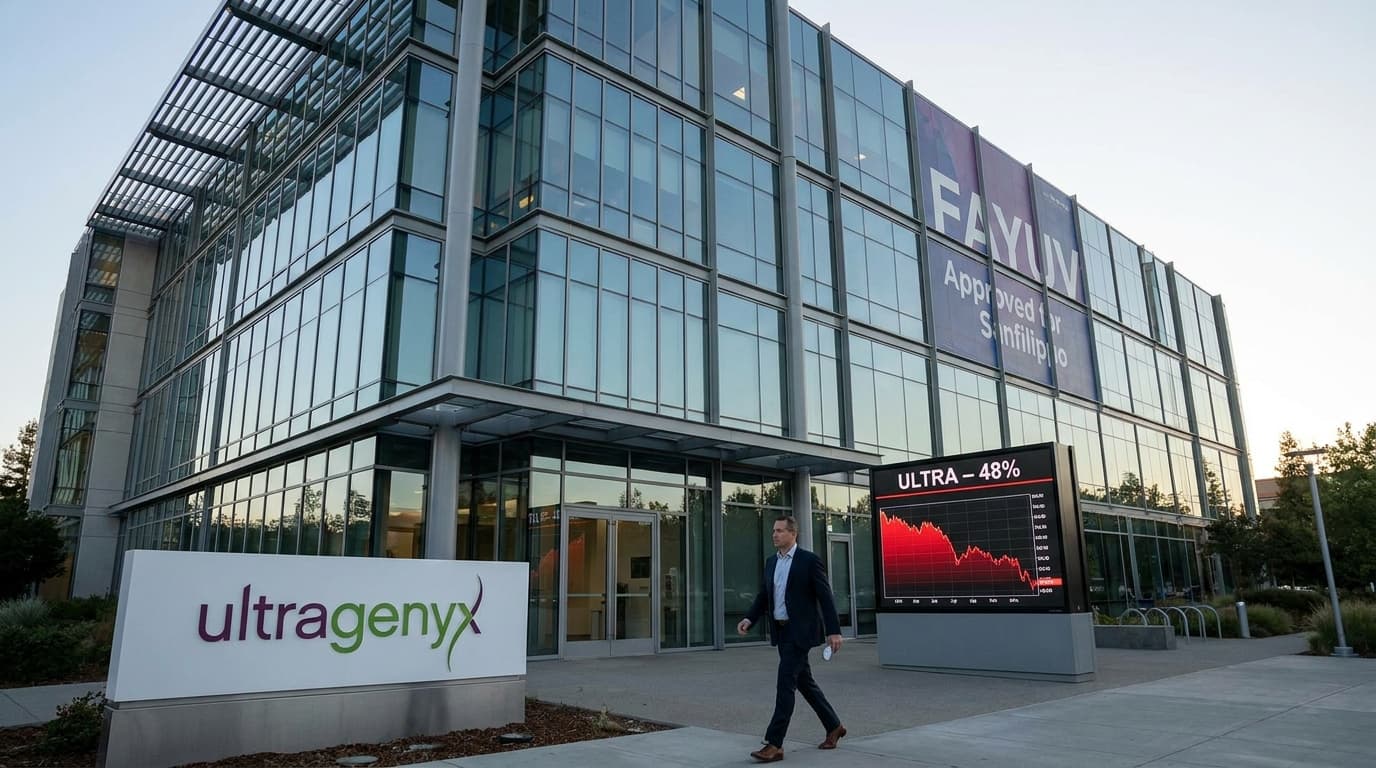
Ultragenyx has spent the last month moving between regulatory momentum and pipeline retrenchment. The company won approval for Fayuvi in Sanfilippo syndrome type A and, shortly before that, for Genglycos in glycogen storage disease type Ia, giving it its first gene therapy approval and a first-ever treatment for Sanfilippo. Each approval also came with a priority review voucher that can be retained for future use or sold, with the price as high as $200 million.
Those gains were interrupted by a major setback earlier this month, when the Phase 3 Aspire trial showed that apazunersen failed to improve cognition in Angelman syndrome. Ultragenyx’s stock fell nearly 50% on that news, and CEO Emil Kakkis told BioSpace the company now has to manage its cost structure after failing on a big program.
The road here
Kakkis said the Fayuvi approval was particularly meaningful because he has worked on mucopolysaccharidosis diseases since the beginning of his career. He founded Ultragenyx in 2010 to develop treatments for these ultrarare, progressive neurological conditions, and the company’s first approval came in 2017 with Mepsevii for a different type of MPS.
In Kakkis’ account, the long arc of Sanfilippo drug development is central to why Fayuvi matters strategically as well as clinically. He described seeing children in the hyperactivity phase of the disease at an MPS meeting in 1991, before the disorder progresses to neuronal damage, wheelchair confinement and, in most patients, survival only into the teen years. He contrasted that with a patient treated with Fayuvi at age 5 who, eight years later, is still active and participating in family life, though she cannot speak.
He also pointed to the youngest patient treated in Fayuvi’s Phase 1/2/3 Gene Transfer trial, now 4 years old, as evidence for what earlier intervention could mean. Ultragenyx hopes Sanfilippo syndrome can be added to newborn screening panels so treatment could begin at six months old.
The commercial picture
For Ultragenyx, the two approvals do more than add products. They offer external validation for an adeno-associated virus gene therapy strategy that has required years of investment and that still faces a hard commercial test in very small patient populations. Kakkis said both products show that AAV gene therapy can be used and be effective, but added that the challenge is not only getting these therapies approved, it is making them commercially viable.
That is the key signal from this stretch for the broader rare-disease field: regulatory success alone is not enough. Ultragenyx now has two newly approved gene-therapy-era products that address high unmet need, but management is simultaneously cutting back after a major pipeline miss. That combination suggests investors may give more credit to rare-disease platform builders that can prove both technical repeatability and a disciplined path to commercialization.
TD Cowen said in an Aug. 19 note that Genglycos’ accelerated approval was a key milestone because it marked the first gene therapy approval for the company, validating years of investment in the platform.
What to watch
Ultragenyx’s resource review extends beyond apazunersen. In January, the company lost $1 billion in value after the Mereo BioPharma-partnered setrusumab failed to reduce fracture rate in two Phase 3 studies in osteogenesis imperfecta, though both studies met a key secondary endpoint on bone mineral density improvement. Kakkis said Ultragenyx is keeping setrusumab and expects more understanding with the FDA regarding next steps by the end of the year.
The near-term question is how much Ultragenyx trims after the Angelman failure while protecting programs it still sees as salvageable and supporting a growing commercial business. The company now has regulatory wins that could strengthen revenue foundations, but it also has to show that those approvals can offset the financial and strategic weight of repeated late-stage disappointments.