Pandemic preparedness is moving out of emergency mode and into a harder phase: keeping manufacturing networks ready without the demand surge that justified them during COVID. Recent moves across Europe suggest the industry is trying to convert crisis lessons into an operating model that can support both outbreak response and day-to-day biologics production.
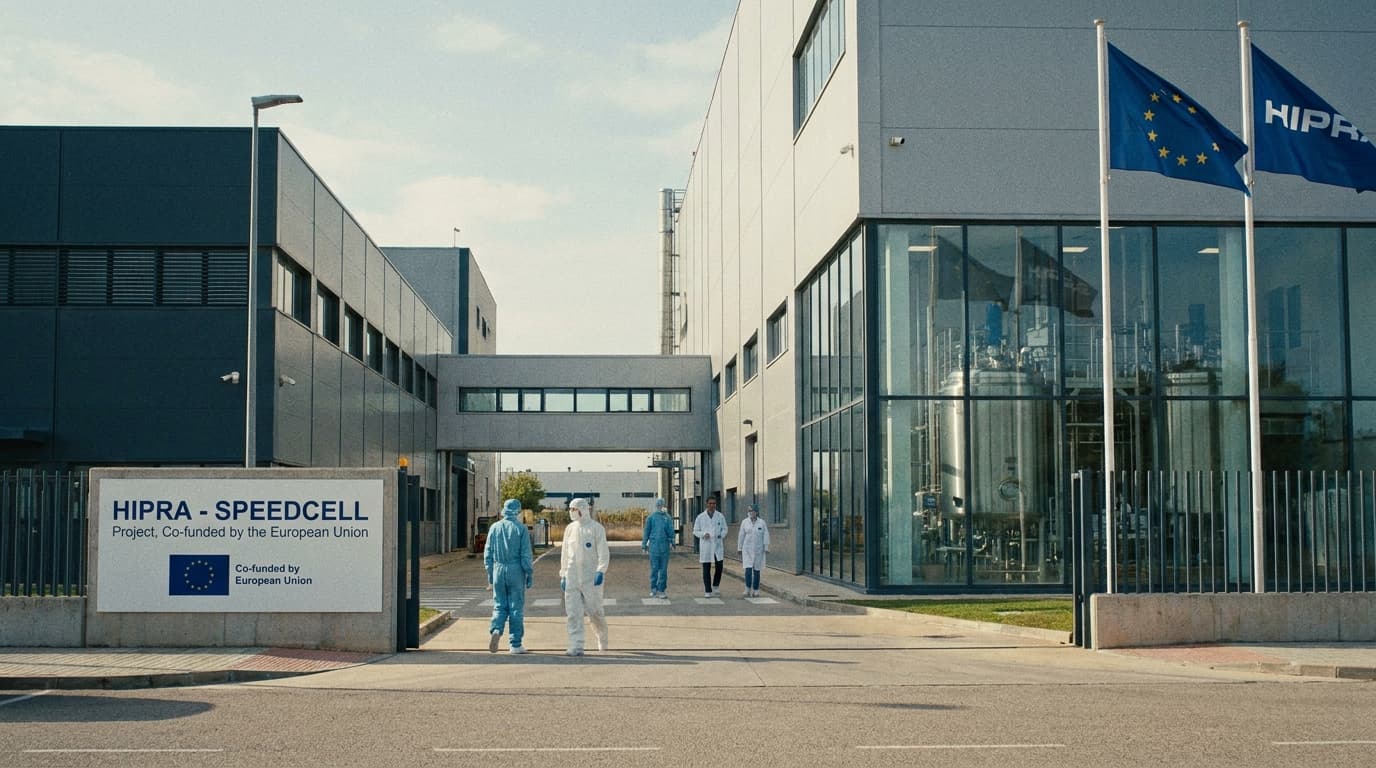
One example is SPEEDCELL, a project coordinated by the Spanish biopharma HIPRA and co-funded by the EU. One year after launch, the project said in late July that it had completed its first year of activity. While SPEEDCELL is intended to support faster development and production of biologics for health emergencies, HIPRA says the broader goal is a development and manufacturing platform that could also be used for routine vaccine and biologics programs.
What SPEEDCELL Is Building
Marc Biarnés, SPEEDCELL project manager and research and development manager at HIPRA Human Health, said the effort is based on a modular approach designed to be reused across different programs, with the objective of shortening the path from a new biological target to a manufacturable product. In practical terms, he said, the work covers the path from sequence through gene synthesis, cell-line development and process development, ultimately enabling manufacturing.
During its first year, SPEEDCELL established what HIPRA described as the technological and operational foundations needed to accelerate biologics development. That included commissioning critical equipment, establishing two dedicated laboratories and supporting work across gene synthesis, cell-engineering technologies, cell-line development and upstream process development.
The commercial test now is whether that platform can show a measurable reduction in the time from sequence to a manufacturing-ready biologic. If it can, HIPRA has a potential route to customers through its CDMO arm, HIPRA Biotech Services. That matters because preparedness infrastructure is hard to sustain if it remains a contingency asset rather than a service buyers use in normal markets.
The Broader Preparedness Shift
SPEEDCELL is not appearing in isolation. In February, the Coalition for Epidemic Preparedness Innovations said it would accelerate the development of platform technologies and embed them with regional manufacturers so countries can move quickly against outbreaks. CEPI said that, alongside regulator collaboration, the approach is meant to support rapid vaccine development, faster manufacturing scale-up, rapid regulatory assessment of candidate vaccines and greater equity from the start.
On the policy side, the European Commission, through DG Health Emergency Preparedness and Response, issued a statement 9 September on the issuance of a Handbook for EU Crisis Procurement of Medical Countermeasures. HERA also maps and monitors supply chains, manufacturing capacities and production sites ahead of future health emergencies.
The common thread is that spare steel and cleanroom space are not enough. COVID-19 showed that minimal manufacturing capacity cannot produce a fast vaccine response without transferable processes, specialized personnel, reliable materials and coordinated supply networks. Preparedness is being defined less as stockpiling and more as maintaining interoperable systems that can switch across products and scenarios.
The Commercial Constraint
That shift carries a business reality for CDMOs and platform builders. Sustainable pandemic preparedness, as Pharma’s Almanac noted, requires manufacturing capacity to remain economically and operationally viable between emergencies through commercial production, procurement commitments, reserved capacity or other support mechanisms.
Guy Rachmuth, senior vice president and global head of Strategic BD and Partnerships at Just-Evotec Biologics, said the industry continues to balance the need for flexibility with the realities of maintaining highly specialized manufacturing infrastructure. He said sponsors are increasingly focused on CDMOs that can deliver consistently and adapt to evolving program needs, and that success often comes from adaptable processes, experienced teams and scalable operations.
That is the real signal in the post-COVID manufacturing push. The market is rewarding not preparedness in the abstract, but preparedness that doubles as productive commercial capability. Platforms that can serve routine biologics work may keep teams sharp, justify capital equipment and preserve regional capacity in a way stand-by emergency infrastructure cannot.
Cell-line development is part of that equation. The source notes that it is becoming a more important lever for biologics manufacturers because it affects both yield and the ease of process scale-up and technology transfer. Rachmuth called it a crucial differentiator when it drives higher productivity and manufacturing efficiency. For groups like HIPRA, that means competitive advantage may come less from owning emergency capacity than from proving they can make reusable development and manufacturing modules work across multiple programs.