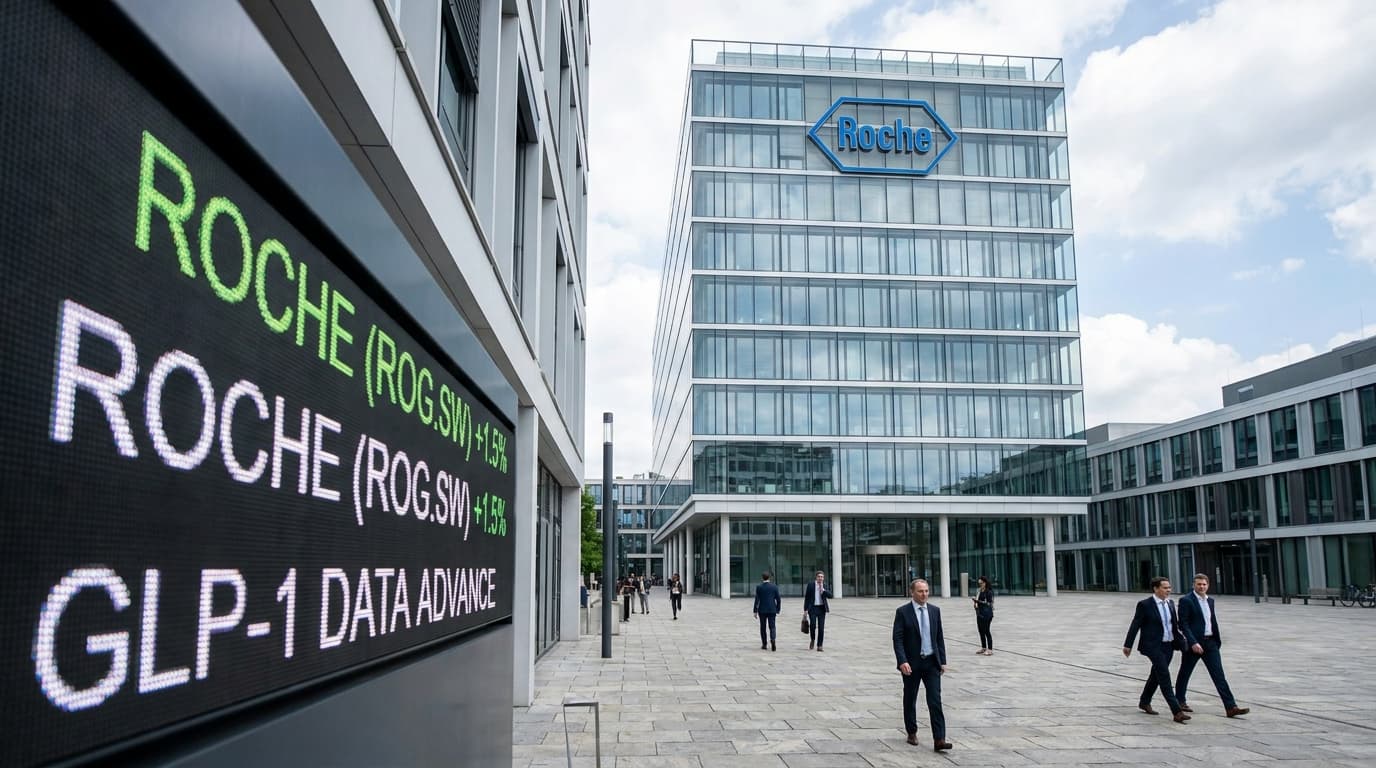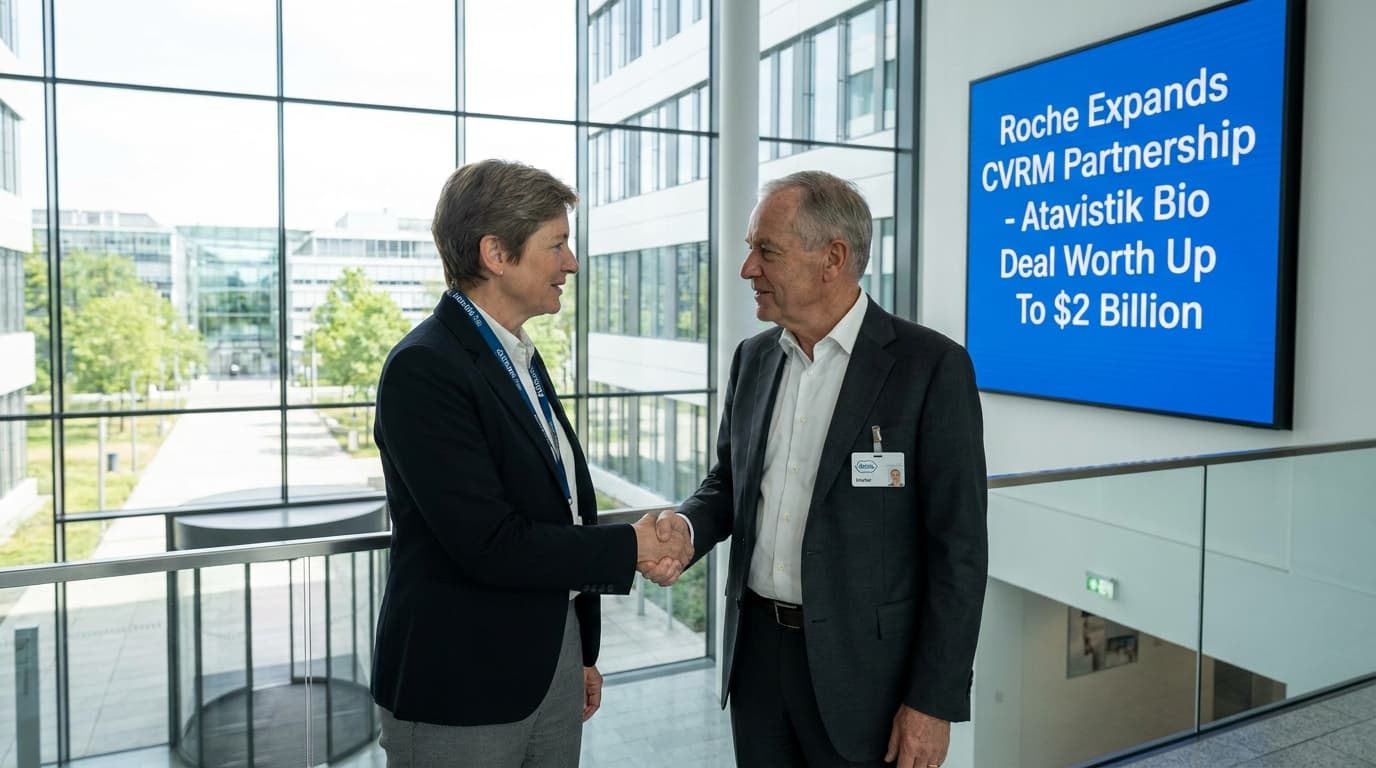
Roche has agreed to pay Atavistik Bio $70 million upfront in a collaboration that could reach up to $2 billion, with the remaining value tied to potentially up to $1.9 billion in milestone payments. The partners plan to use Atavistik’s metabolite-protein screening platform, known as AMPS, to discover allosteric small molecules for cardiovascular, renal and metabolic diseases.
Under the agreement, Atavistik will lead discovery and research activities for several CVRM targets, while Roche will assume responsibility for further preclinical, clinical and commercialization work. BioSpace reported that Atavistik may also receive tiered royalties, making the structure notably backloaded and consistent with Roche paying early for target discovery while reserving most economics for later technical and commercial success.
The Strategic Fit
The transaction adds another piece to Roche’s effort to build more depth in CVRM, an area the company has been treating as a strategic priority even though it sits outside Roche’s traditional oncology stronghold. Boris Zaïtra, Roche’s head of corporate business development, said the company aims to pair Atavistik’s approach to allosteric small molecules with Roche’s disease biology and drug development capabilities to pursue oral therapeutics for patients in need.
That framing matters because Roche has already been broadening its CVRM exposure through multiple routes rather than relying on a single platform or asset class. The sources point to the company’s partnership with Alnylam around the RNAi hypertension therapeutic zilebesiran, its $2.7 billion takeover of Carmot Therapeutics to bolster obesity and diabetes work, and its 2025 buyout of 89bio for a potential deal value up to $3.5 billion. BioSpace also noted that Roche, through Genentech, opened a new Boston R&D center focused exclusively on CVRM diseases just last week.
The signal from the Atavistik deal is that Roche is still buying optionality at the discovery stage, not just late-stage or de-risked assets. A $70 million upfront payment for platform-enabled target work is meaningful, but the much larger backend suggests Roche sees enough value in the chemistry approach to commit now while keeping major spend contingent on execution.
Why Atavistik
Atavistik’s pitch is that AMPS can uncover cryptic, biologically relevant binding pockets on proteins that are typically difficult to modulate. In both source reports, the technology is described as a way to identify novel functional binding pockets that can support small-molecule drug design against hard-to-drug targets.
That capability is what Roche appears to be purchasing, rather than a single named lead program. Atavistik’s internal pipeline remains focused elsewhere, primarily on rare hematologic diseases. Its lead asset, ATV-1601, is an investigational oral allosteric AKT1-selective inhibitor in a phase 1/2 study for hereditary hemorrhagic telangiectasia, and BioSpace said the candidate received fast track designation in June. The company also has allosteric JAK2 selective inhibitors in preclinical development for myeloproliferative neoplasms.
The company has raised $160 million in series B financing over the past year or, as BioSpace described it, reached that total after a $40 million series B extension earlier this year. Investors named across the sources include RA Capital Management, Regeneron Ventures and the Column Group. Roche is also not Atavistik’s first large pharma collaborator: BioSpace reported that Pfizer signed a 2025 research pact covering two undisclosed targets for precision allosteric therapeutics.
For Roche, the implication is straightforward. Instead of treating CVRM expansion as a one-asset acquisition story, the company is assembling discovery tools, infrastructure and external partnerships that could yield multiple oral small-molecule programs over time.