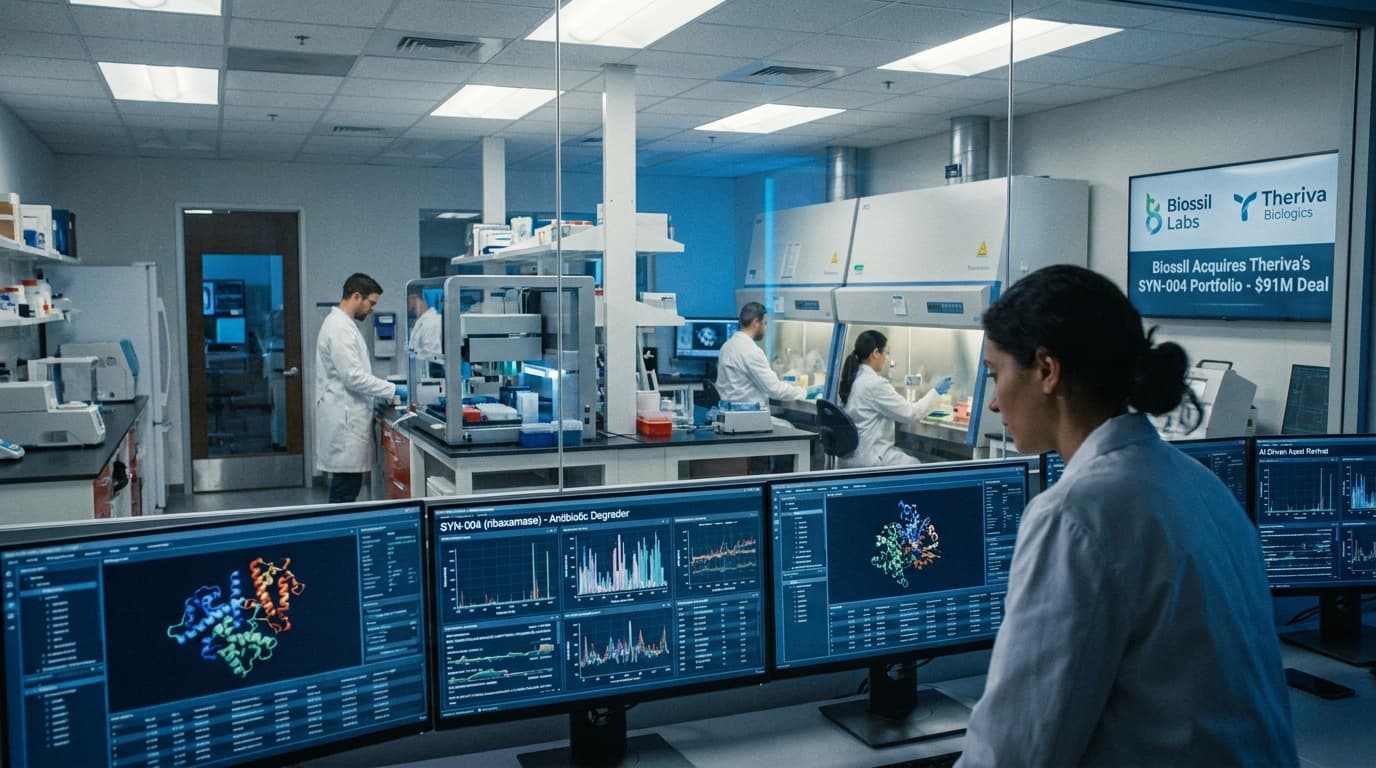
Biossil Labs has agreed to acquire Theriva Biologics’ deprioritized portfolio of antibiotic-degrading enzymes in a deal worth up to $91 million, adding another set of cast-off assets to a strategy built around second looks rather than greenfield drug discovery.
The financial structure is heavily backloaded. Theriva will receive $350,000 upfront, with the potential for $3 million in regulatory milestones and up to $88 million tied to worldwide net sales achievements. Theriva also would be eligible for royalties at a low single-digit rate that could total up to $250 million, according to the companies’ release.
The Portfolio
The lead asset is SYN-004, also known as ribaxamase, a prophylactic therapy designed to protect patients receiving an antibiotic from contracting further infections. Theriva has taken SYN-004 through a phase 2b trial in patients receiving an antibiotic for lower respiratory tract infection, where the candidate demonstrated gut microbiome maintenance and recovery, reduced incidence of Clostridioides difficile infection and lower pathogen rates overall.
Theriva is also transferring two preclinical oral programs: SYN-007, a ribaxamase reformulation, and SYN-006, also called carbenemase.
Biossil said it will continue a phase 1b/2a study of SYN-004 in patients susceptible to graft-versus-host disease and other infections that can occur alongside antibiotic treatment during hematopoietic cell transplant. Theriva had paused enrollment in that study after completing two of the three planned cohorts.
Why The Deal Matters
Theriva deprioritized SYN-004 last year to focus its limited cash on VCN-01, an oncolytic adenovirus in early- to mid-stage trials that includes metastatic pancreatic ductal adenocarcinoma and refractory retinoblastoma. For Biossil, that kind of portfolio triage is the opportunity.
Since emerging from stealth in April with a $70 million investment from OpenAI and Founders Fund, Biossil has specialized in buying drug candidates that underperformed or lost internal priority. It signed a $105 million deal in July for a failed antibiotic from Summit Therapeutics, previously bought dismutase mimetics from Galera Therapeutics in a similar $105 million biobucks agreement, and also picked up Pfizer’s sickle cell candidate rivipansel.
The signal in the Theriva transaction is commercial as much as scientific. Anti-infective support programs often struggle for capital inside small biotech companies, but a buyer assembling multiple overlooked assets can spread risk across a portfolio and use AI as a decision-support layer for which shelved candidates deserve renewed development spending.