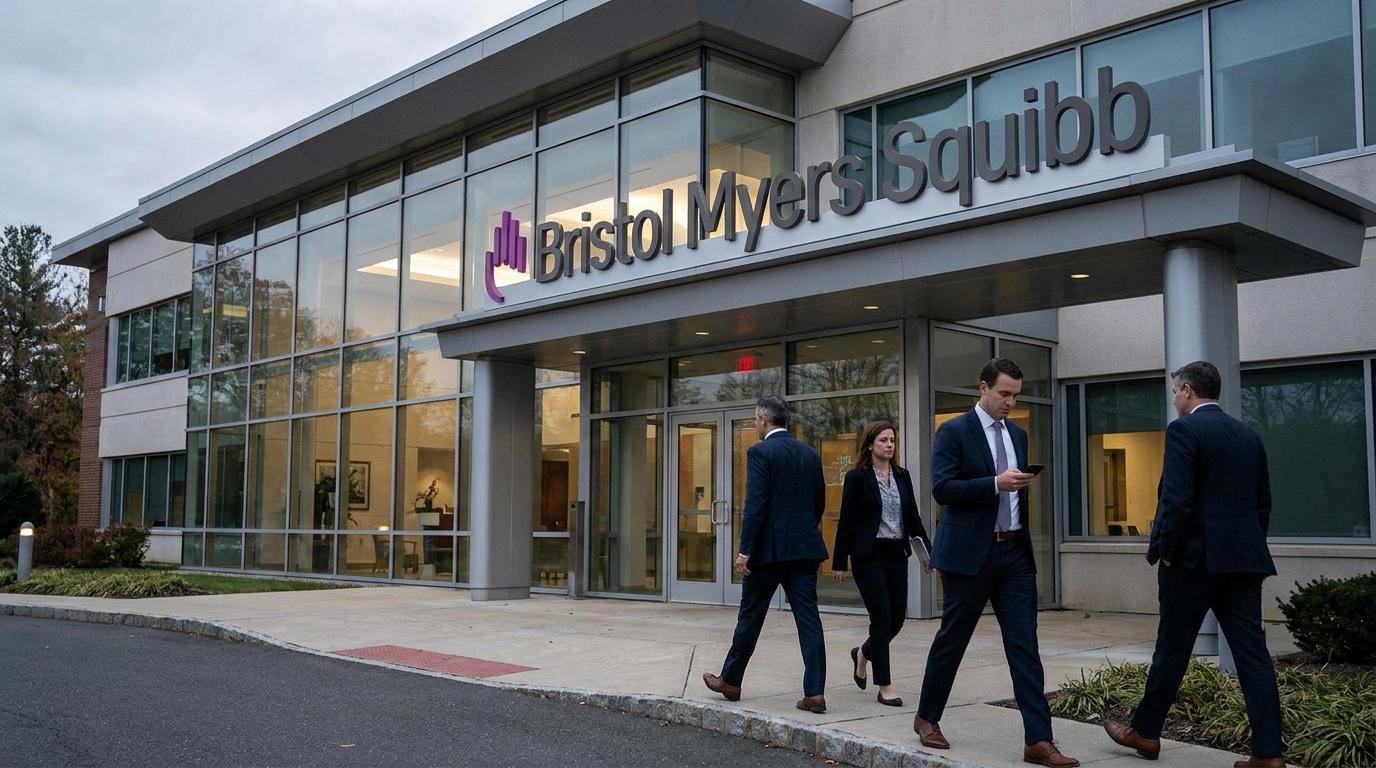
Bristol Myers Squibb is restructuring its R&D organization, folding early research and discovery together with drug development as the company prepares for major patent losses in its core business. The company said Thursday that Chief Research Officer Robert Plenge will leave his role by the end of the year, with Chief Medical Officer and development head Cristian Massacesi set to lead the combined R&D group at the start of next year.
The strategic point is less about org-chart simplification than capital allocation. Bristol Myers Squibb has been under pressure to show that its next wave of products can absorb the coming erosion from Eliquis and Opdivo, two products that together generated roughly half of the company’s $48.2 billion in revenue in 2025.
Why BMS Is Changing The Structure
Previously, Bristol Myers Squibb ran early research and discovery separately from development. The company said the new setup is intended to combine scientific and clinical expertise to accelerate pipeline development, improve execution and focus resources on the opportunities with the greatest potential.
In a written comment to BioSpace, a company spokesperson said bringing research and development together will “more closely connect our scientific and clinical expertise, sharpen portfolio decision-making and execution, and help us focus our resources on the opportunities with the greatest potential.” CEO Christopher Boerner said the combined organization is also meant to help the company attract and retain talent, build capabilities and better integrate new technology.
Plenge, who has been with Bristol Myers Squibb for more than seven years and was previously at Celgene before Bristol Myers Squibb’s $74 billion acquisition of that company in 2019, will remain in an advisory role through March 2027.
The Business Context
The timing reflects a familiar large-pharma problem: defending earnings before the patent cliff hits. In 2025, Pfizer-partnered blood thinner Eliquis brought in $14.4 billion in global sales, while PD-1 inhibitor Opdivo generated $10 billion worldwide. Those two products account for an outsize share of the company’s revenue base, making pipeline productivity a strategic necessity rather than a routine operating goal.
Last month, BMO Capital Markets said it was underwhelmed by Bristol Myers Squibb’s plans for navigating those losses of exclusivity. The firm highlighted risk around three potential replacements in the pipeline: Cobenfy, milvexian and admilparant.
That makes the reorganization a signal that Bristol Myers Squibb is trying to tighten how it chooses and advances programs, not just reduce handoffs between research and development. The company did not provide on-record answers to BioSpace’s questions about potential layoffs, pipeline changes or any AI role in the effort, so the immediate practical impact on staffing and portfolio breadth remains unclear.