China’s latest five-year plan for biopharma sets out goals that experts told BioSpace are largely within reach, especially its aim to become a leading global innovation engine rather than a supplier of low-cost copycat drugs. The more difficult question is not whether China can keep producing attractive science, but whether its companies can convert that output into broader, durable revenue bases.
Several of the plan’s headline targets already look achievable on current momentum. Claudia Lin, founder of Biotech East West Technical Services, said she has “no doubt China will meet its goal,” while Evaluate director Mark Lansdell said the foundation for meeting the end-of-decade objectives was laid in the first years of the decade.
The targets that look attainable
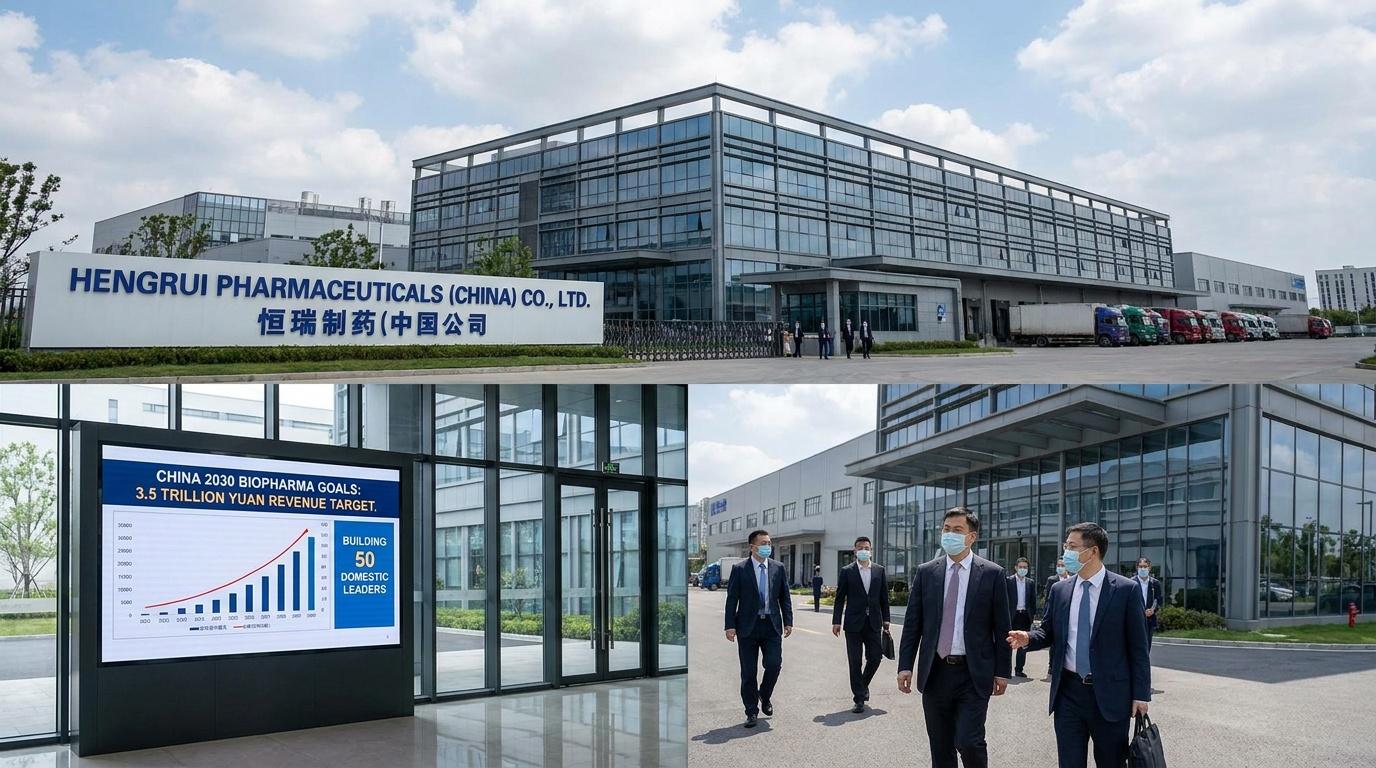
Lin said China is all but guaranteed to have five blockbusters by the end of the decade and is on track to exceed its 2030 revenue target of 3.5 trillion yuan, or $521.8 billion. Lansdell described the five-blockbuster target as “largely now a matter of time.”
The confidence reflects how systematically China has built its sector. BioSpace reported that the country has been issuing five-year plans for biotech since 2007, using them to set priorities and specific goals for domestic drug development. Jeremy Levin, co-founder and executive chair of Ovid Therapeutics, said during a BioSpace webinar last month that China has been “executing superbly” on that roadmap.
Commercial evidence of that rise is now visible in partnering activity. According to an October report from Locust Walk cited by BioSpace, China’s share of global licensing deal value this year rose to 58%, up from 14% in 2023, as biopharma companies committed billions of dollars in partnerships with Chinese firms.
The harder milestone
The toughest target, according to multiple experts cited by BioSpace, is building 50 domestic drugmakers with 10 billion yuan, or $1.5 billion, in annual revenue. Cody Powers, a principal at ZS, said many of China’s largest companies still generate most of their sales domestically, and reaching that next tier likely requires more companies to expand abroad.
Powers pointed to existing examples including Hengrui Pharmaceuticals, with $4.74 billion in 2025 revenue, Fosun Pharma at $6.25 billion and Hansoh Pharmaceutical at $2.25 billion. But moving from that base to 50 companies above the threshold would likely require a change in how Chinese biotechs structure deals.
China’s dominant model has been to license out worldwide rights to domestically developed drugs and then collect only local revenue after launch. Powers argued that if companies continue to out-license in that way, hitting the 50-company goal will be difficult. In his view, Chinese biotechs will need to retain ex-China ownership of the drugs they develop if they want to build enough top-line scale.
The remaining constraints
Lin said China also needs a cultural shift from winning on speed, cost and volume toward making quality a central focus. She said the country has improved quality and compliance, particularly after joining the International Council for Harmonization in 2017, but novel modalities still create challenges around safety, efficacy and data reliability.
Policy pressure from abroad could add friction without fully changing the trajectory. BioSpace noted U.S. measures such as the BIOSECURE Act and a recent U.S. Department of Treasury proposal to limit outbound investments to biotech entities in certain countries of concern, including China. The Treasury proposal includes an exemption for licensing deals, which is one reason experts cited in the piece did not view current U.S. actions as enough to halt China’s progress.
Powers said trade policy could still act as a headwind if U.S. and European policymakers move to restrict overseas growth more aggressively. He also argued that China needs better domestic economics, because healthcare authorities have continued to negotiate lower prices, limiting local revenue even as the sector’s innovation profile improves.
The signal from the latest plan is that China no longer needs to prove it can generate competitive biotech assets. The unresolved issue is whether its companies can capture enough long-term value from that innovation to build a deeper bench of global-scale businesses.