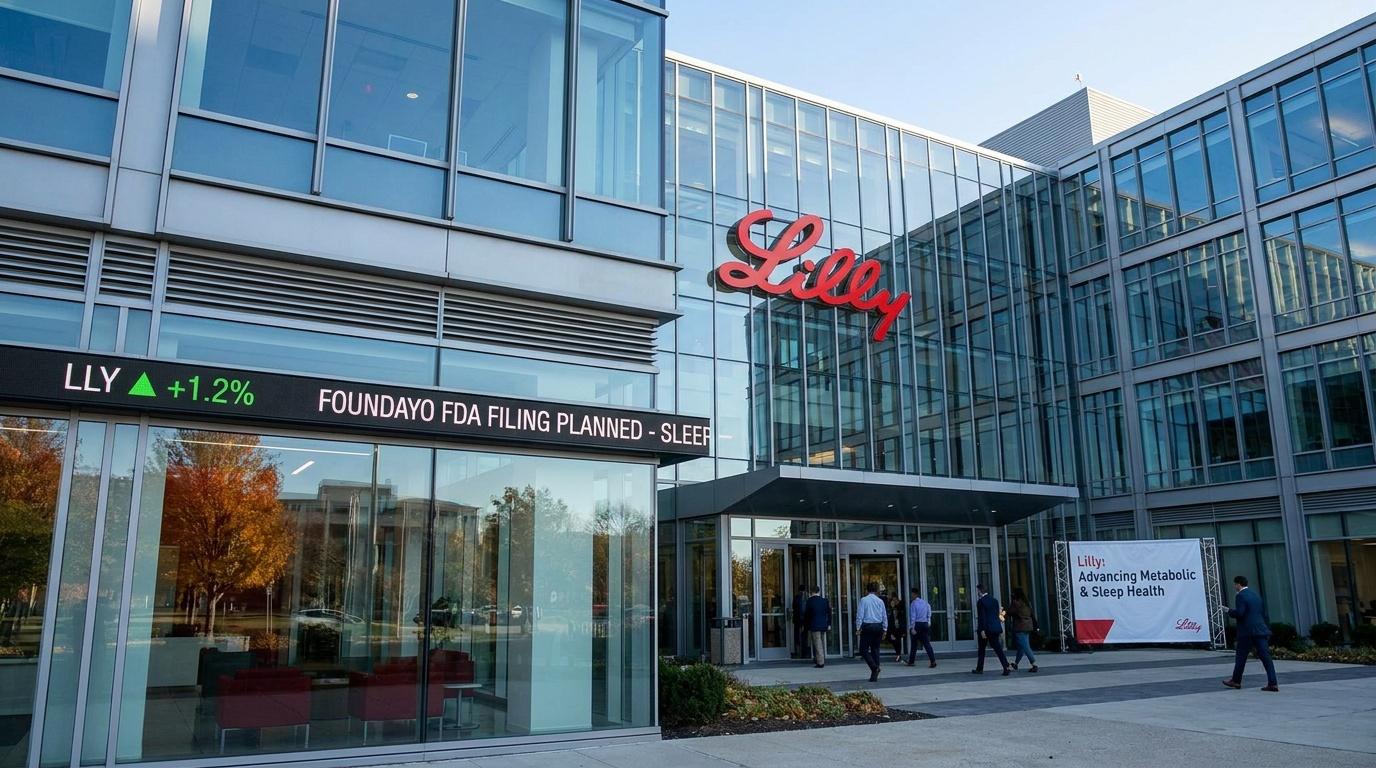
Eli Lilly said it will seek FDA approval for Foundayo in obstructive sleep apnea after the oral GLP-1 drug significantly reduced disease severity in a late-stage study. The company said it plans to submit the application before the end of this year.
The move would broaden Lilly’s position in sleep apnea beyond Zepbound, which secured the first approval for a drug in obstructive sleep apnea in December 2024 for adults with moderate-to-severe disease and obesity. Lilly is now attempting to bring an oral option into the same indication, a notable commercial step because Wegovy is not approved for sleep apnea.
The data
In the Phase 3 ATTAIN-OSA study, Foundayo, also known as orforglipron, met the primary endpoint by significantly reducing scores on a scale measuring sleep apnea severity after 52 weeks. The trial included around 712 people with moderate-to-severe obstructive sleep apnea and obesity or overweight.
Lilly reported that Foundayo reduced breathing interruptions during sleep by up to 44% on average, with up to 32% of participants achieving disease remission or mild disease. The company also said the pill met one secondary endpoint by reducing sleep apnea-specific hypoxic burden by 55.9% in patients who do not use positive airway pressure, or PAP, therapy and by 45.8% in those who do use such a machine or mask.
On safety, Lilly said Foundayo’s profile was generally consistent with previous trials in its ACHIEVE and ATTAIN programs. In the cohort not using PAP therapy, 12.2% of patients on Foundayo discontinued treatment because of adverse events versus 3.8% on placebo. Among patients using PAP assistance, discontinuations were 6.8% on Foundayo and 0.6% on placebo.
The commercial picture
Foundayo was approved in April for weight loss, three months behind Novo Nordisk’s oral Wegovy. Earlier this month, Lilly said Foundayo had secured 40% of new patient starts since the oral GLP-1 entered the market in the second quarter, though Novo CEO Mike Maziar Doustdar disputed that figure and suggested the split is 80% to 20% in favor of his company.
That disagreement matters because Lilly is trying to build more than a weight-loss franchise around Foundayo. A sleep apnea filing would test whether oral GLP-1s can compete not only on convenience, but also on label breadth. Lilly already has evidence that payer and prescriber interest can extend beyond obesity alone when a metabolic drug picks up an additional high-burden indication.
The strategic read is straightforward: Lilly is using Foundayo to reinforce Zepbound rather than cannibalize it. If the FDA accepts the filing and ultimately clears the drug, Lilly could market both an injectable and an oral therapy into obstructive sleep apnea while Novo still lacks an approved sleep apnea label for Wegovy.
Zepbound’s approval was backed by the Phase 3 SURMOUNT-OSA trial, which showed the drug was five times more effective than placebo in reducing breathing disruptions in adults not on PAP therapy. Novo has pointed to a posthoc analysis of the pivotal SELECT trial, presented at the American Diabetes Association’s annual conference in June, showing a significantly lower incidence of the condition in adults with overweight or obesity and established cardiovascular disease who took Wegovy versus placebo, but that is not an approval.