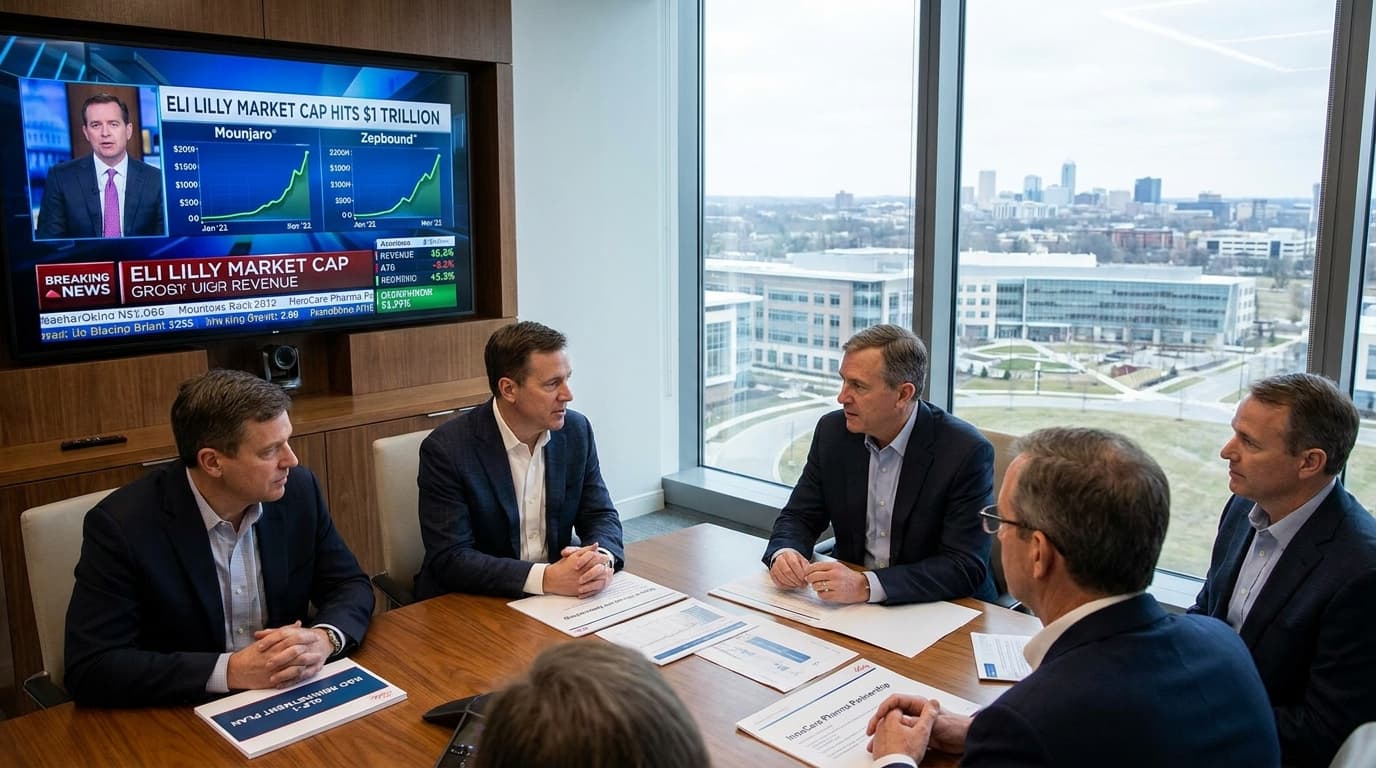
Eli Lilly is being defined less by a single winning franchise than by what it is doing with the cash that franchise is producing. In a BioSpace column comparing Lilly with the Los Angeles Dodgers, the commercial facts behind the analogy point to a broader strategic pattern: Lilly has used its revenue surge in GLP-1s to increase its flexibility across dealmaking, therapeutic breadth and international expansion.
The numbers in the piece are stark. Lilly last year became the first pharma company to reach a $1 trillion market cap, according to the source. Its weight loss and diabetes GLP-1 products, Zepbound and Mounjaro, combined for more than $35 billion in revenue last year, topping Merck’s Keytruda. The column also says Lilly has bought more biotechs over the past decade than any of the other top 12 pharmas by revenue, with 2026’s total now above $30 billion.
The Commercial Picture
The strategic implication is not simply that Lilly has a large obesity business. It is that the company is converting category leadership into a broader capital deployment advantage. The source presents Lilly as having moved ahead of Novo in GLP-1s and then using that lead to spend aggressively across the biotech sector rather than keeping its investment concentrated in one modality.
That matters because large-product success can create two very different operating models. One is dependence on a blockbuster franchise. The other is using blockbuster economics to lower future concentration risk. The source argues Lilly is pursuing the second path, pairing its GLP-1 strength with marketed and pipeline exposure in Alzheimer’s disease, cardiometabolic health, immunology, neuroscience and cancer. Kisunla, one of only two disease-modifying therapies for Alzheimer’s disease, is cited as part of that diversification.
The Road Here
The column highlights recent cross-border dealmaking as another part of Lilly’s strategy. Last month, Lilly committed up to $3.25 billion to work with Beijing-based InnoCare Pharma on therapies for five targets with critical unmet medical needs, though the targets were not disclosed. Two months earlier, Lilly agreed to pay up to $1.9 billion to deepen its collaboration with Shanghai-based Abbisko Therapeutics, a small-molecule and immuno-oncology developer.
The source also points to Lilly’s move into psychedelic therapeutics through AtaiBeckley, which it says was acquired for up to $3.8 billion. Taken together, those deals suggest Lilly is not limiting its external innovation strategy to one geography or one scientific theme. Instead, it appears willing to deploy capital where it sees optionality, whether that is China-originated assets, immunology and oncology targets, or newer neuroscience approaches.
The clearest signal from the piece is that Lilly’s current edge may be less about the existence of GLP-1 demand than about reinvestment discipline. Plenty of companies can benefit from one high-growth market. Fewer can use that windfall to keep adding shots on goal across multiple therapeutic areas and business-development channels. Based on the source’s framing, Lilly’s present strength comes from turning commercial leadership into strategic range rather than treating obesity revenue as an endpoint.