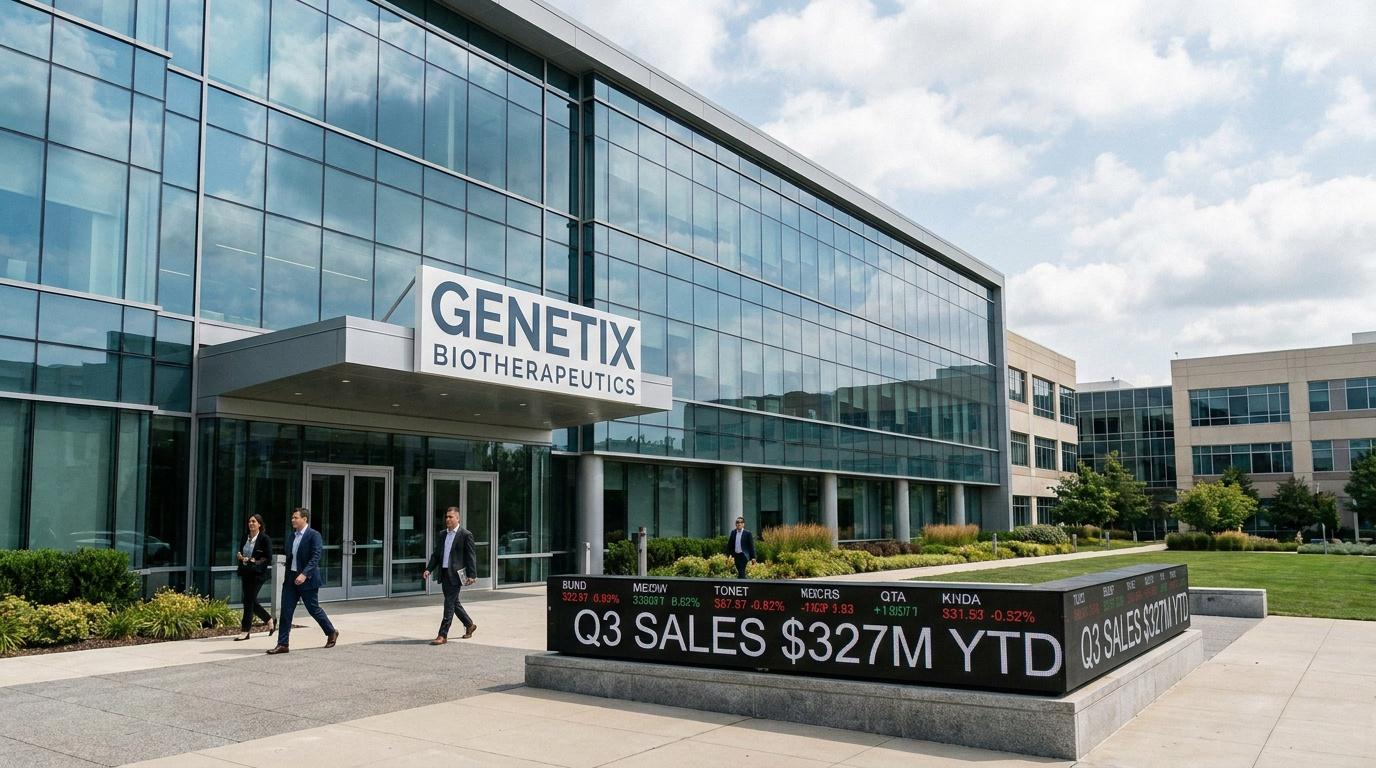
Genetix Biotherapeutics, the company formerly known as bluebird bio, said Monday that its marketed genetic medicines generated $327 million in U.S. net sales year to date, a 95% increase from the prior year. The portfolio includes Lyfgenia for sickle cell disease, Zynteglo for beta thalassemia and Skysona for cerebral adrenoleukodystrophy.
The update is notable less for a single quarter than for the reversal it suggests. Bluebird had struggled to commercialize its portfolio after winning one of two gene therapy approvals in sickle cell disease in December 2023, and a cash crunch eventually led to its sale to Carlyle and SK Capital Partners for roughly $50 million in February 2025. Genetix now says it became profitable in the fourth quarter of 2025 and has remained so since.
The commercial picture
Genetix said 700 patients have signed up for treatment since 2022, including 326 this year alone. That compares with the dozens of patients who received infusions of Lyfgenia, Zynteglo or Skysona in 2024, showing how much of the company’s problem had been commercial execution rather than lack of clinical interest.
The company projected 2026 net sales of $500 million. That matters for former shareholders because the 2025 take-private deal paired $3 per share in upfront cash with a contingent value right worth $6.84 per share if the current product portfolio reaches $600 million in net sales in any 12-month period before Dec. 31, 2027. S&P Capital IQ currently values that potential earnout at about $68 million.
As a private company, Genetix is no longer required to disclose financials, which makes the sales update more selective than the reporting investors previously received when bluebird was public. For context, the company reported that its three products combined for $83.8 million in sales in full-year 2024, while the most recent full-year earnings from that period showed a $200 million net loss.
How Genetix says it changed the setup
Genetix attributed the improvement to reimbursement, treatment-network expansion and manufacturing changes. The company said it achieved reimbursement for more than 95% of U.S. patients and expanded access to 100 qualified treatment centers in the U.S.
On operations, Genetix said it doubled manufacturing capacity and improved network reliability to 90%, up 20% since 2024. It also said 85% of patients now obtain enough cells with just two collections, and that turnaround time has been reduced by 25 days to 65 days.
Those details point to a practical lesson for the broader gene-therapy field. For ultra-complex autologous products, approval did not by itself create a business. Genetix’s update suggests reimbursement coverage, site readiness and manufacturing consistency were the actual gating factors for converting demand into revenue.
The company also pointed to awareness-building efforts including a partnership with the National Football League Alumni Association, and said Lyfgenia is being pushed into younger patients. Dosing has begun in the HGB-210 study, which includes children as young as 2 years, and a regulatory submission is planned for the end of the year to lower the age limit to 12.
CEO David Meek said these changes have prepared Genetix for global expansion and “multibillion-dollar growth.” The nearer-term signal is narrower but more concrete: a company that had been held up as a warning case for gene-therapy commercialization is now presenting itself as evidence that the model can work if the delivery system around the medicine is rebuilt.