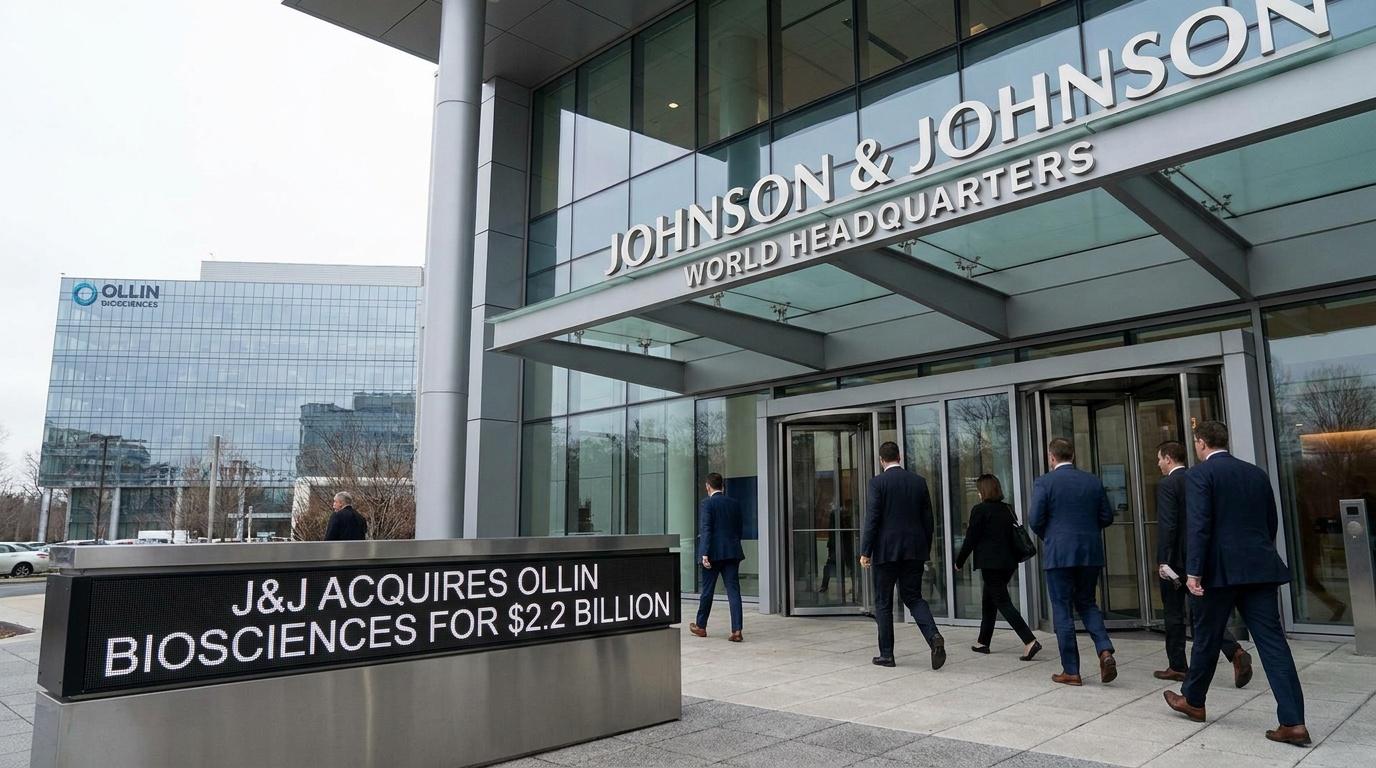
Johnson & Johnson said Monday it will acquire Ollin Biosciences for $2.2 billion upfront, adding the clinical-stage biotech’s lead ophthalmology candidate OLN324 and giving Ollin shareholders the chance to receive up to $1.125 billion in additional milestone payments. The target is a bispecific antibody for retinal disease, and the transaction gives Johnson & Johnson a direct entry into a part of ophthalmology where it currently does not sell a retinal therapy.
At the same time, Johnson & Johnson disclosed a separate financing arrangement with Blackstone Life Sciences tied to the same program. Once the acquisition closes, Blackstone has agreed to provide up to $750 million over several years to support OLN324’s Phase 3 development in exchange for regulatory and sales milestone payments and royalties on an approved product. BioSpace described those royalties as single digit.
The structure matters as much as the asset. Johnson & Johnson is paying to secure control of a late-stage program, while shifting a substantial share of development spending to an outside capital partner. For a company rebuilding part of its vision pipeline, that combination reduces some of the balance-sheet burden of a large Phase 3 push without giving up the commercial opportunity if the drug works.
The Asset Johnson & Johnson Is Buying
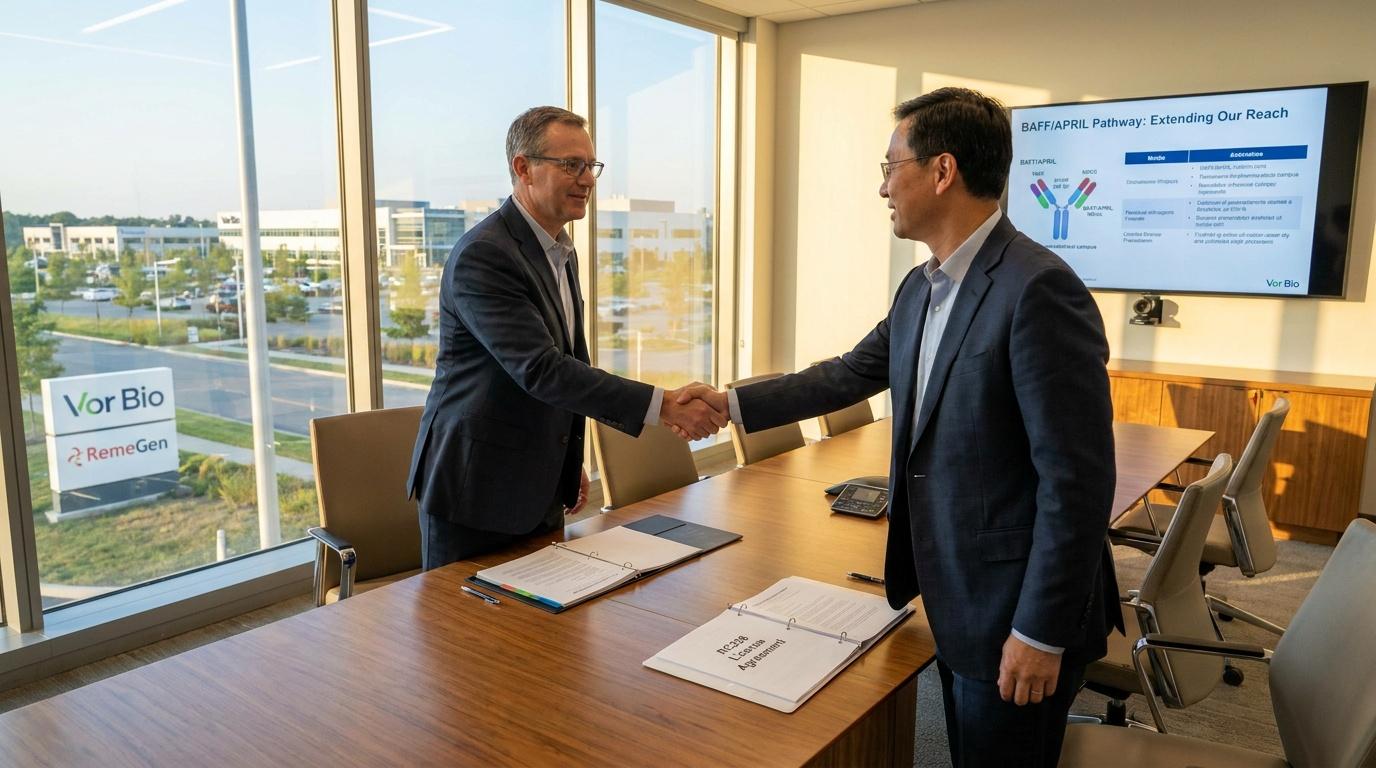
OLN324 is designed to block vascular endothelial growth factor, or VEGF, and angiopoietin-2, or Ang2. Those are the same pathways targeted by Roche’s Vabysmo, which is already approved in wet age-related macular degeneration and diabetic macular edema. Ollin has argued its candidate could be best in class.
In a proof-of-concept Phase 1b study, and in the mid-stage JADE trial as described by BioSpace, OLN324 was compared head to head with Vabysmo. The sources say the candidate showed faster and greater improvements in retinal anatomy or structural changes in the eye in both wet AMD and DME, along with numerically better vision improvement or greater vision gains. MedCity News said those Phase 1b data were presented in July at the annual meeting of the American Society of Retina Specialists.
Johnson & Johnson’s Kip Connor, vice president and ophthalmology disease area stronghold leader, said in the acquisition announcement that the data generated to date point to a clinical profile that could deliver more effective reduction of retinal fluid and potentially allow more time between treatments. That longer-interval possibility is commercially important in retinal disease, where injection frequency and clinic workflow both shape adoption.
The Deal Structure
The headline acquisition price is $2.2 billion upfront. A Financial Times report cited by BioSpace had said Sunday evening that Johnson & Johnson was expected to buy the company for up to $3.4 billion; Monday’s company announcement clarified the structure as the upfront payment plus up to $1.125 billion in milestones.
Blackstone’s role is separate from the purchase price. Under that agreement, the investor will fund late-stage testing after closing rather than taking ownership of the product. For Johnson & Johnson, that means the company can advance OLN324 through Phase 3 while using external financing that is directly linked to the program’s regulatory and commercial outcome.
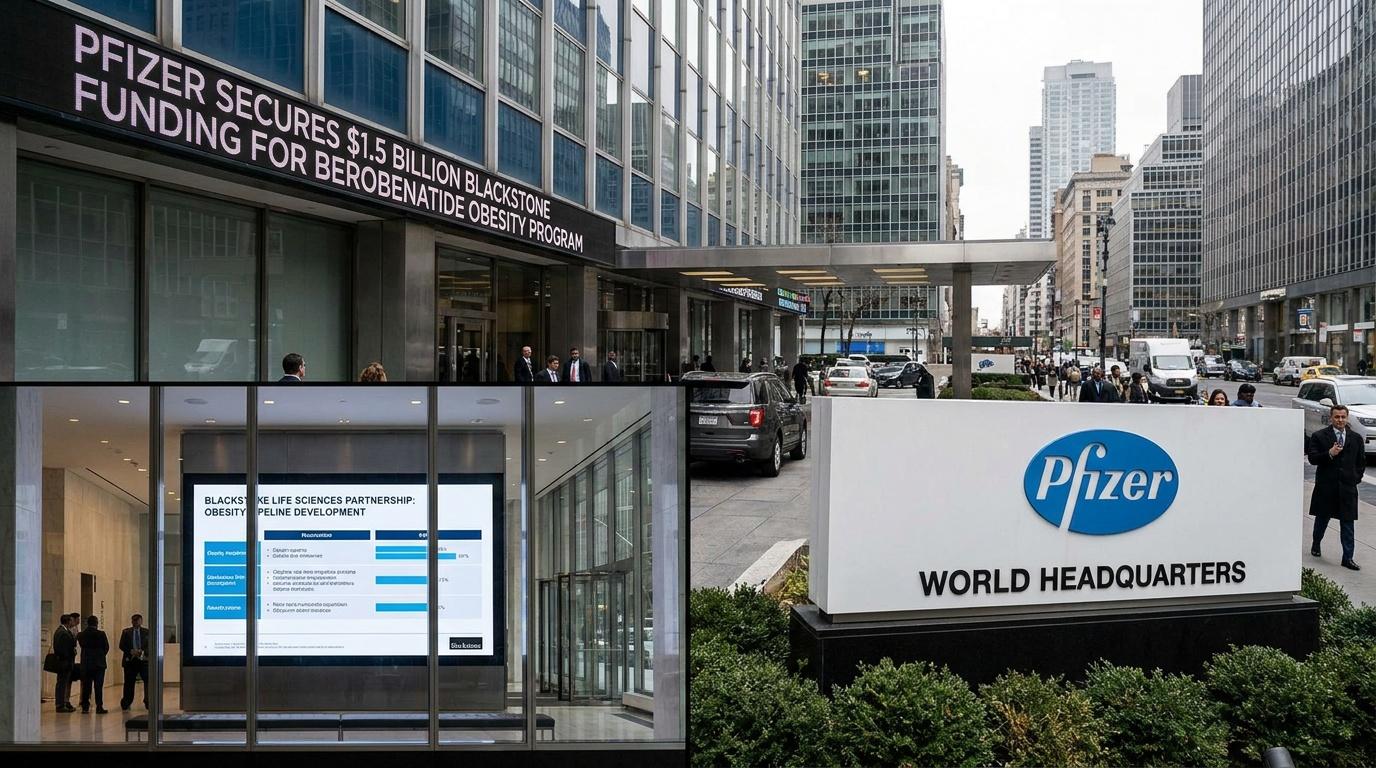
Blackstone has used similar structures elsewhere. BioSpace noted that the firm last week offered Pfizer up to $1.5 billion tied to berobenatide development and signed a comparable agreement with Merck in 2025 for sac-TMT. That makes the Ollin arrangement part of a broader financing pattern in which investment firms take development risk in exchange for milestone and royalty exposure.
The Road Here
Ollin formed in 2023 and launched publicly last year with $100 million in financing led by Arch Venture Partners, Mubadala Capital and Monograph Capital, according to MedCity News. In June of this year, TCGX and Arch co-led a $330 million Series B to support planned Phase 3 tests of OLN324, and BioSpace reported that Ollin had said at the time it intended to start Phase 3 by the end of the year.
OLN324 was discovered by Innovent Biologics, and Ollin collaborated with the China-based company on clinical development. The acquisition also brings a second program, OLN102, although the MedCity News source excerpt only identifies it as another bispecific program and does not provide further detail.
For Johnson & Johnson, the acquisition also fills a visible gap. The company’s main existing vision presence is in its medical technology business, including Acuvue contact lenses and Tecnis intraocular lenses, rather than retinal drugs. Its more recent effort to expand in vision through gene therapy ran into setbacks: last year, a Phase 3 study of an X-linked retinitis pigmentosa gene therapy associated with RPGR mutations failed, and MeiraGTx reacquired global rights earlier this year.
That history gives this deal a clearer strategic meaning. Johnson & Johnson is not adding an early research option in ophthalmology; it is buying a comparatively advanced asset with head-to-head data against an established competitor, then pairing the acquisition with dedicated trial financing. The bet is that a stronger retinal fluid effect and the prospect of more time between treatments could be enough to carve out room against Vabysmo in two large established indications.