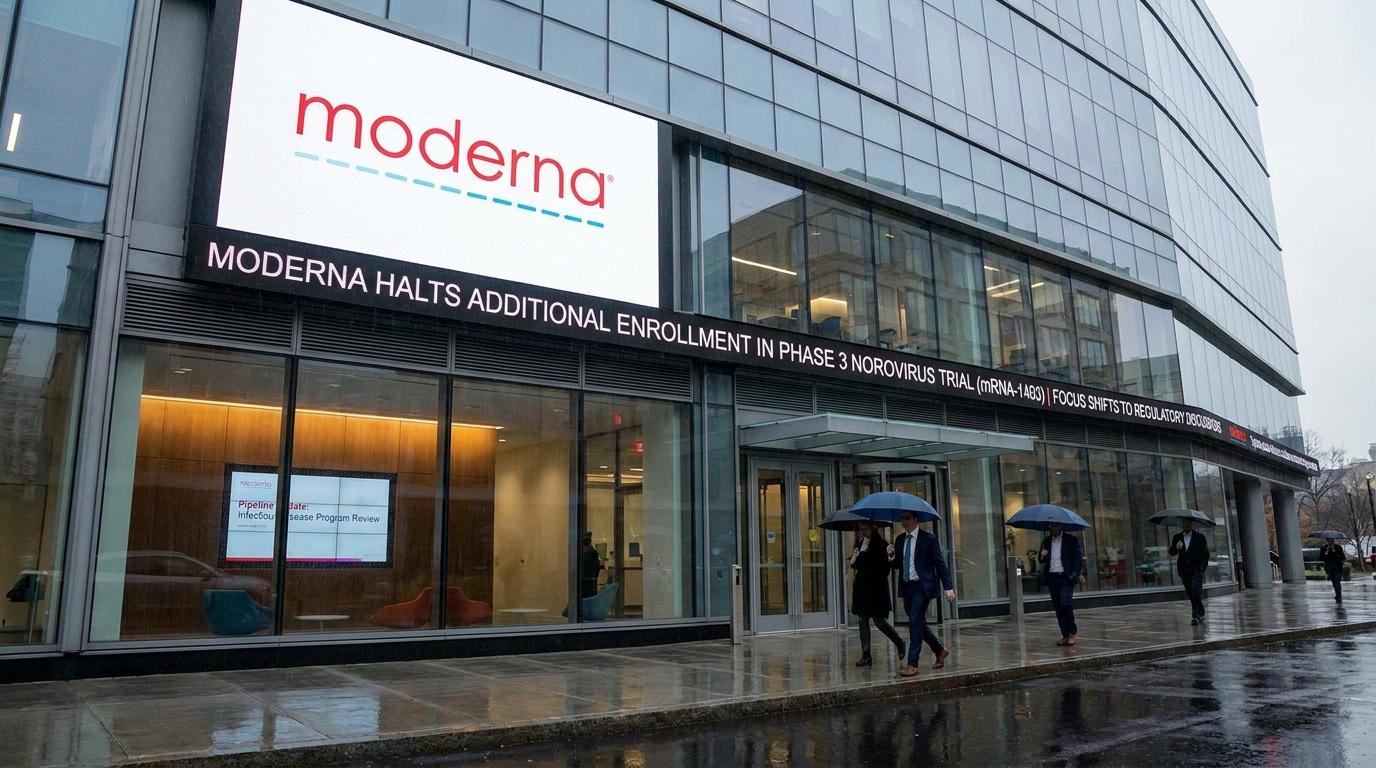
Moderna has dropped its plan to enroll an additional cohort in the phase 3 trial of its norovirus vaccine mRNA-1403 and will instead meet with health authorities to determine the program’s next steps.
President Stephen Hoge said on the company’s third-quarter earnings call that, after reviewing the program, Moderna decided not to add a cohort in the coming winter season. The change matters because the company had said in July, when mRNA-1403 missed its interim analysis, that it intended to enroll another cohort.
For Moderna, the shift leaves the future of one of its infectious disease programs in limbo while signaling a more selective approach to late-stage development. On the same call, the company reported that R&D expenses fell 27% to $583 million in the third quarter, primarily due to lower clinical development costs after the completion and wind-down of certain late-stage studies in its infectious disease portfolio, along with continued cost efficiencies across the organization.
The Road Here
Moderna started the late-stage trial in September 2024 as the norovirus season began in the Northern Hemisphere. The trivalent vaccine is intended to prevent acute gastroenteritis, the stomach inflammation caused by norovirus.
The program has already faced multiple disruptions. In February 2025, the FDA placed the study on hold over a reported case of Guillain-Barré syndrome, a neurological disorder in which the body’s immune system mistakenly attacks the peripheral nervous system. The following November, the study had to continue into a second season in the Northern Hemisphere after it did not find enough cases in the Southern Hemisphere.
The most recent setback came in July, when Moderna disclosed that mRNA-1403 had missed at an interim analysis. Rather than immediately commit more trial resources, the company is now seeking regulatory feedback first.
What The Shift Signals
Hoge did not provide detail on what options Moderna and regulators are discussing, saying only that the company would offer broader updates after those talks. That makes the immediate issue less about a single trial amendment and more about whether the existing dataset can support a revised development path or whether the program needs a more fundamental reset.
The decision also separates the norovirus effort from Moderna’s more advanced programs. While mRNA-1403 is moving into a regulatory consultation phase, Moderna and Merck are working toward regulatory submissions for the personalized mRNA cancer vaccine intismeran autogene after a phase 3 melanoma win in combination with Keytruda.
That contrast suggests Moderna is prioritizing programs with a clearer line to filing and launch over ones that may require another season of enrollment without a defined regulatory endpoint. For investors and competitors in vaccines, the immediate takeaway is that norovirus remains an open technical and regulatory challenge rather than a near-term commercial opportunity for Moderna.