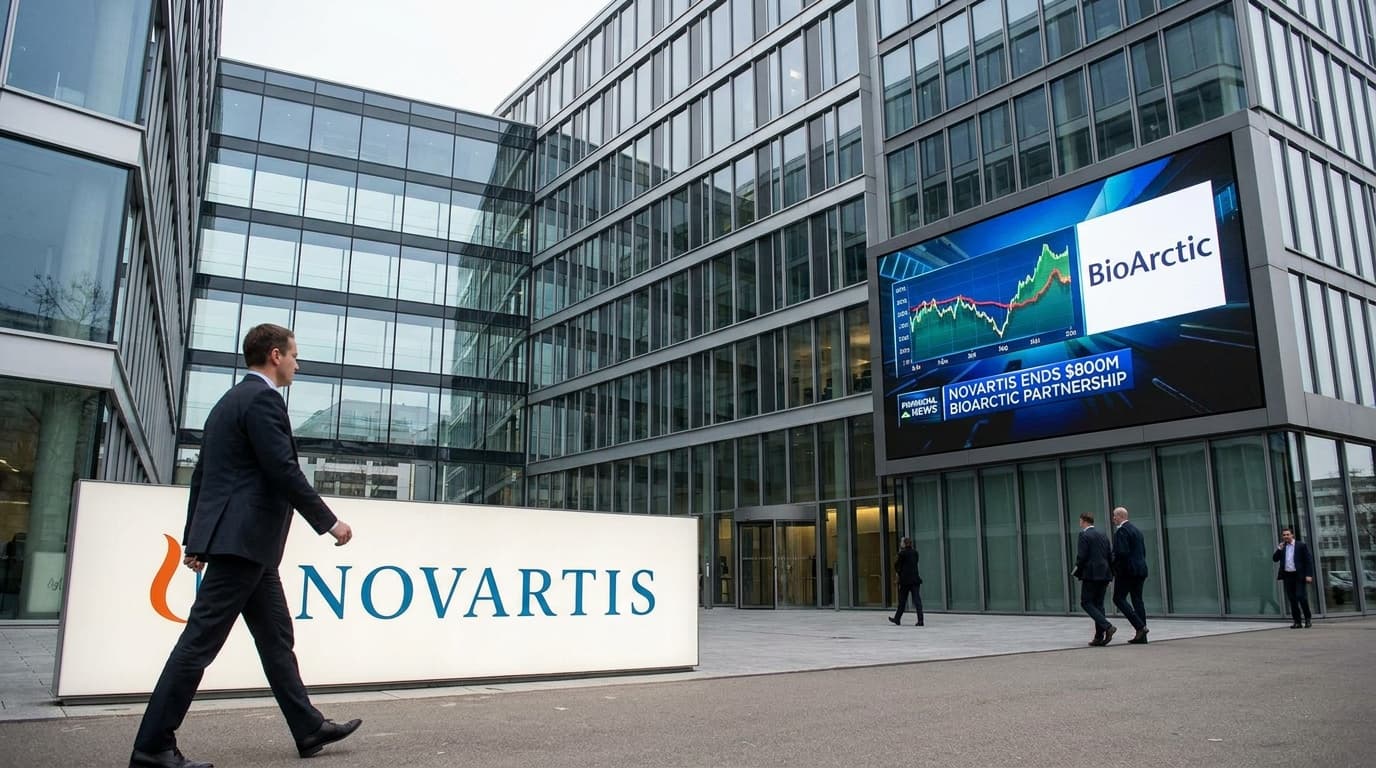
Novartis has walked away from its neuroscience partnership with BioArctic just 14 months after signing the pact, ending a deal that carried up to $800 million in potential value.
The agreement, announced in August 2025, gave Novartis access to BioArctic’s BrainTransporter technology in combination with a Novartis antibody against an undisclosed neurodegeneration target. Novartis paid $30 million upfront, while BioArctic became eligible for $772 million in milestone payments plus tiered mid-single digit royalties on any resulting product sales.
What ended
BioArctic said Novartis decided to discontinue the program on Monday afternoon. The Swedish biotech added that the decision was “unrelated to BioArctic's BrainTransporter technology.” Novartis’ reason for ending the collaboration had not been explained in the source report.
That distinction matters because BrainTransporter was the core asset BioArctic contributed. The platform is designed to use the transferrin receptor, or TfR, to help biological drugs cross into the brain, addressing one of the central delivery problems in neurology.
Why the decision matters
The blood-brain barrier has repeatedly limited efforts to deliver effective doses of antibodies and other large molecules to targets in neurological disorders. The source report notes that this challenge has affected programs in Alzheimer’s, Parkinson’s, Huntington’s and amyotrophic lateral sclerosis.
Novartis had presented the BioArctic alliance last year as part of a broader effort to test multiple ways of improving brain uptake and systemic delivery. Earlier this year, Bob Baloh, Novartis Biomedical Research’s global head of neuroscience, told Fierce that there is unlikely to be a single solution to the blood-brain barrier problem and that a toolbox of technologies will be needed. Against that backdrop, ending one collaboration does not look like a retreat from the field so much as a narrowing of which tools Novartis wants to keep funding.
The broader portfolio context
The source report places the BioArctic exit alongside other recent pressure points for Novartis’ pipeline, including failed phase 3 trials for del-desiran in a rare muscle-wasting disease and for the cardiovascular drug pelacarsen. At the same time, Novartis has continued to make selective investments in brain delivery, including a September decision to pay $125 million to exercise its option to acquire Sironax’s brain delivery platform.
For BioArctic, the immediate financial loss is the foregone chance at the $772 million in milestones, though it retains the $30 million upfront payment. The company also still has other large-pharma relationships, including an Alzheimer’s disease pact with Bristol Myers Squibb and a separate BrainTransporter collaboration with Eli Lilly.