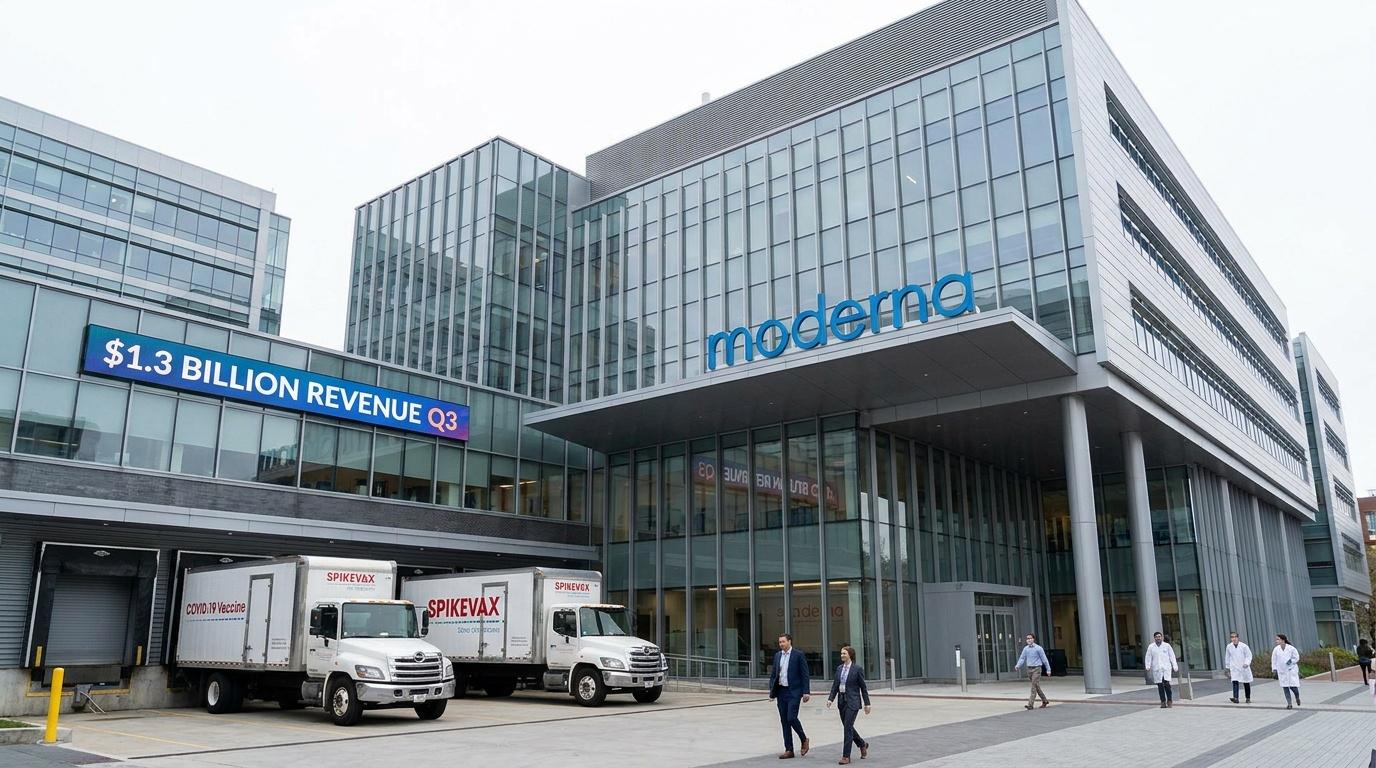
Moderna reported a stronger-than-expected vaccine quarter, with revenue rising 29% to $1.3 billion from $1 billion in the same period a year earlier, and used the performance to raise its 2026 revenue outlook. The company said it has totaled $1.8 billion in revenue so far this year.
The immediate driver was COVID. CFO Jamey Mock said higher vaccine sales lifted results, with mNEXSPIKE and Spikevax available globally for the coming season. That matters because several other large vaccine makers have reported declining vaccination rates that cut into sales, particularly in the U.S. market.
For Moderna, the quarter suggests its respiratory business remains durable enough to fund the next stage of the company, but the details also show why investors are focused on whether that dependence can give way to oncology and a broader commercial base.
The commercial picture
Mock said that in the U.S., while the vaccination season is still ongoing, Moderna has seen increased uptake of mNEXSPIKE and vaccination rates have been relatively stable versus the prior year. Even so, Jefferies said U.S. revenue for the product is overall declining, with global expansion leading sales growth instead.
Jefferies also said Moderna could gain more market share once Pfizer’s contract in the EU expires at the end of this year. The firm attributed the quarter’s COVID vaccine strength to favorable COVID seasonality, noting that Moderna typically records the bulk of its vaccine revenue in the third quarter when vaccinations pick up.
Moderna did not provide specific sales numbers for its COVID shots, but vaccine sales overall reached $1.27 billion, above the $891 million consensus cited by William Blair. That total also included mRESVIA for respiratory syncytial virus, mFLUSIVA and mCOFLU, which became available in some global markets this year.
Mock said stronger-than-expected revenue came from both the U.S. and international markets, driven by a mix of increased demand, operational execution and timing of shipments between the third and fourth quarters. After the quarter, Moderna raised its full-year revenue expectations to an increase of 15% to 25%, up from 10% previously.
Analysts asked whether some of that benefit reflected advanced vaccine deliveries for 2027 arriving in 2026. Mock said he was confident 2027 will see growth, pointing to flu products that have not yet fully picked up after approval and launch, as well as major partnerships in Europe and Latin America.
The pipeline transition
Moderna received approval for the flu shot mFLUSIVA in August, but it is still waiting to hear from the FDA on a path forward for the combined flu and COVID shot, which has been made available elsewhere in the world as mCOFLU. The mFLUSIVA approval was notable because, according to the source report, FDA leadership had initially refused to even review the application.
The company’s vaccine pipeline also showed strain. Earlier in the third quarter, Moderna said its norovirus vaccine mRNA-1403 did not meet the early bar for advancement in a Phase 3 clinical trial. It now plans not to enroll another cohort this coming season and will take existing data to regulators to discuss next steps.
Beyond vaccines, management is aiming for a more important shift in 2027: oncology. Early in the third quarter, Moderna shares rose after the company and Merck reported that the personalized cancer vaccine intismeran autogene improved outcomes in melanoma when paired with Keytruda. More detailed data presented last month at the European Society of Medical Oncology meeting in Spain showed a 42% reduction in the risk of recurrence or death.
President Stephen Hoge said Moderna and Merck are working to submit a biologics license agreement for melanoma by year end, with an FDA decision to come in 2027. The companies are also preparing for a Phase 2 readout in renal cell carcinoma. Chief Development Officer David Berman said that if results from the 282-patient trial are strong enough, Moderna and Merck could consider taking that Phase 2 study directly to the FDA.
The signal from the quarter is that Moderna’s current business still rises and falls with seasonal respiratory demand, but the company is trying to use that cash flow to bridge into a less seasonal oncology franchise. The raised outlook helps near-term credibility; whether 2027 marks a real transition depends on regulatory follow-through in melanoma and the strength of the renal cell carcinoma data.